Alligator vs. Crocodile: 7 Ways to Tell the Difference
How can you tell an alligator from a crocodile?
On this page
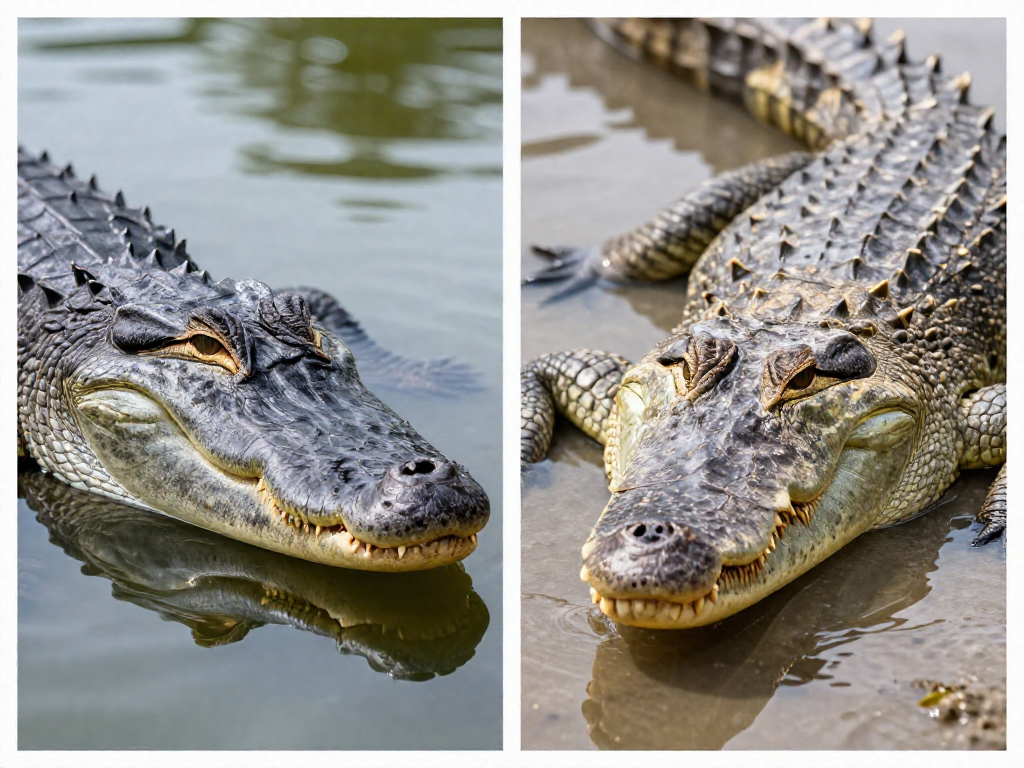
Alligator vs. Crocodile: The Quick Answer
Here's the fastest tell: look at the snout. Alligators have wide, rounded, U-shaped snouts and hide their bottom teeth when their mouths are closed. Crocodiles have narrow, pointed, V-shaped snouts with toothy grins where upper and lower teeth interlock and stay visible.
They aren't the same animal with two names, either. Alligators and crocodiles belong to different families—Alligatoridae and Crocodylidae (two separate branches of the crocodilian family tree)—and they've been evolving apart for tens of millions of years.
Below, we'll walk through all 7 ways to tell them apart, from snout shape and teeth to color, behavior, and where in the world each one lives.
One quick reassurance for US readers: if you spot one in a swamp, marsh, or pond almost anywhere in the country, it's almost certainly an American alligator. Wild crocodiles in the US are rare and mostly limited to the southern tip of Florida.
1. Snout Shape: The Fastest Tell
Want to ID a gator or croc in two seconds flat? Just look at the snout. It's the single most reliable clue, and it works from a safe distance—or even from a photo on your phone.
Here's the cheat sheet:
- Alligators have a broad, rounded snout shaped like the letter U.
- Crocodiles have a narrow, pointed snout shaped like the letter V.
That difference isn't just for looks—it's all about diet and bite mechanics. An alligator's wide, U-shaped jaw spreads out the force of its bite, giving it the crushing power to crack open tough prey like turtles and snails. A crocodile's slender, V-shaped snout trades raw crushing strength for speed and precision, making it great for snatching fish and grabbing a wider variety of prey.
Think of it like tools: the alligator's snout is a sturdy nutcracker, while the crocodile's is more like a pair of quick, pointed tongs.
The best part? You don't need to get anywhere near these powerful reptiles to use this trick. A clear side or top view—from behind a barrier, on a boat tour, or in a nature documentary—is all it takes. Spot the U or the V, and you've already won half the guessing game.
2. The Toothy Grin: Hidden vs. Visible Teeth
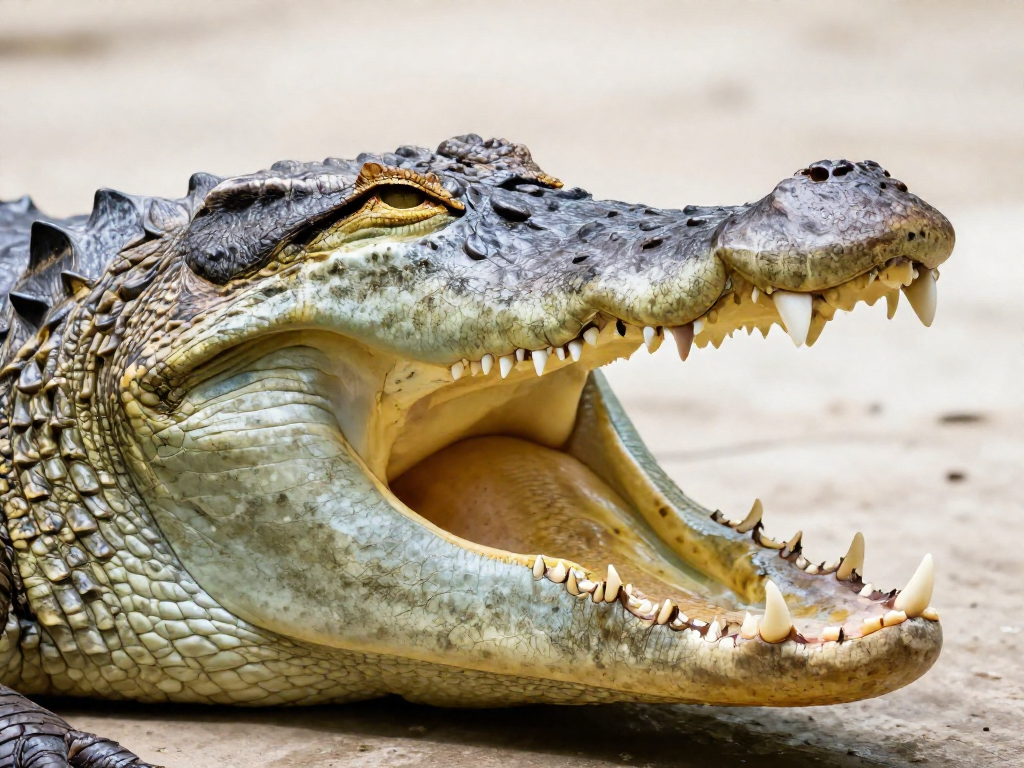
Here's a creepy-cool party trick: you can often ID a crocodile by its smile alone. When a croc shuts its mouth, you can still see teeth poking out—so it looks like it's permanently grinning. An alligator, on the other hand, keeps its bottom teeth tucked out of sight.
Why the difference? It comes down to jaw shape.
- Alligators have a wider upper jaw that overlaps the lower one. When the mouth closes, the upper jaw hides the bottom teeth almost completely—so a closed-mouth gator looks tidy and toothless on the sides.
- Crocodiles have upper and lower jaws of roughly equal width, so the teeth interlock like a zipper. The big fourth tooth on each side of the lower jaw juts up over the upper lip, staying visible even when the mouth is shut. That's the classic "crocodile smile."
So if you spot teeth peeking out of a closed mouth, you're likely looking at a crocodile.
One important caveat: never get close enough to actually count teeth. These are powerful wild animals, and tooth-spotting is best done from a safe distance or in photos—leave the up-close work to the experts.
3. Color and Skin
Here's a quick color cheat: if it looks like it's wearing swamp camouflage, it's probably an alligator. Alligators tend to be dark gray to nearly black, which helps them disappear into the murky, tannin-stained water of slow Southern swamps and rivers. Crocodiles usually wear lighter shades — olive, tan, or grayish-green — that match the sandier, brackish coastal habitats where they often live.
Why the difference? Color tends to track habitat and water clarity. Murkier water favors darker skin for blending in; clearer or sandier surroundings favor lighter tones.
One big caution: this is a secondary clue, not a sure thing. Bright sun, shade, and a fresh coat of mud can all make an animal look darker or lighter than it really is. Pair color with snout shape and teeth before you make the call.
4. Where They Live: Habitat and Geography
Here's a shortcut that beats every snout-and-teeth comparison: in the United States, if you spot one lounging in a lake, swamp, or golf course pond, it's almost certainly an alligator. Geography alone can crack the case before you ever get close.
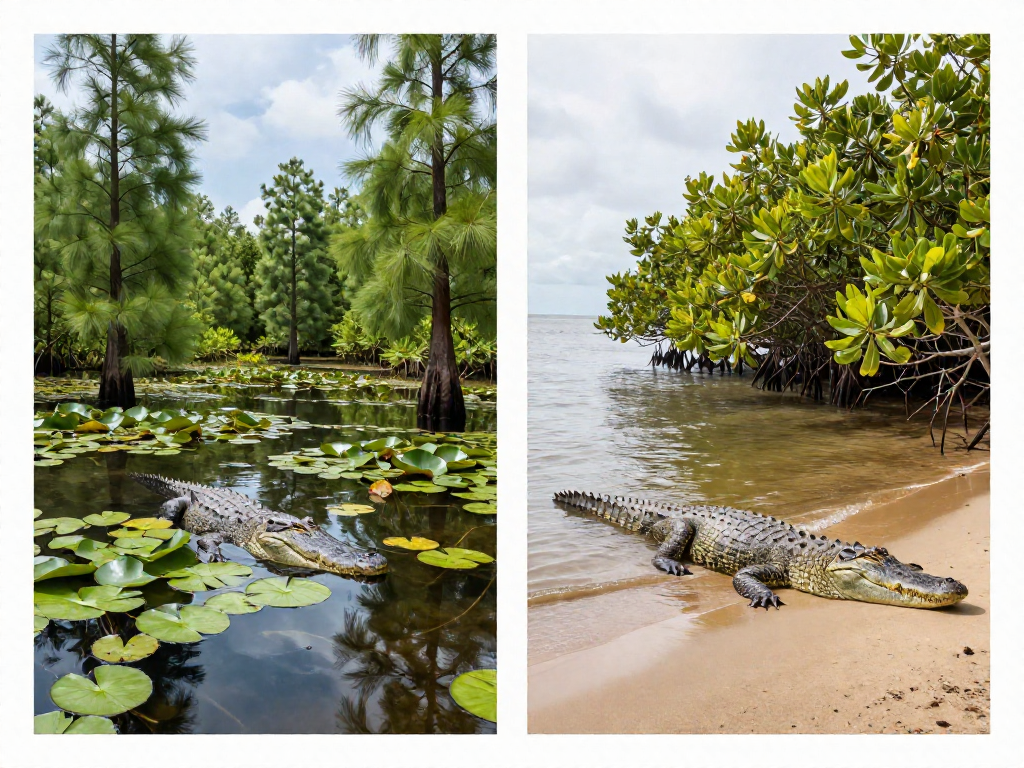
Alligators are freshwater animals, thriving in swamps, marshes, rivers, and lakes. They live in just two places on Earth: the southeastern US and a small stretch of eastern China. Crocodiles, on the other hand, are world travelers, found across the tropics in Africa, Australia, Asia, and the Americas. Their secret is salt glands—special structures in the tongue that flush out excess salt—which let them tolerate saltwater and live in coastal estuaries and mangroves where gators can't.
So where do the two ever cross paths? Just one spot on the planet: South Florida, especially the Everglades. American alligators and American crocodiles share that watery wilderness, making it the only place on Earth where you might genuinely need a closer look to tell them apart.
5. Size and Build
Pound for pound, the biggest crocodilian on Earth isn't an alligator at all. That title goes to the saltwater crocodile, which can stretch past 17 feet — longer than a midsize car — and weigh over 1,000 pounds (Smithsonian National Zoo).
By comparison, American alligators usually top out around 10–15 feet. They tend to look bulkier and broader, with a darker, blackish-gray body, while many crocodiles appear leaner and lighter, often olive to tan.
Here's how the two stack up at a glance:
- Saltwater crocodile: the largest, sometimes 17+ feet
- American alligator: typically 10–15 feet
- Build: alligators chunkier and darker; crocs slimmer and paler
One catch: sizes overlap. A young croc can easily be shorter than a full-grown gator, so size alone won't crack the case. Use it alongside the snout and tooth clues from earlier sections for a confident ID.
6. Behavior and Temperament
Here's a difference you can't see in a photo: the crocodile is the one more likely to come at you. Wildlife experts widely consider crocodiles—especially saltwater and Nile crocodiles—more aggressive and unpredictable toward humans than alligators. American alligators, by contrast, usually want nothing to do with people and will retreat if given the chance.
That changes fast when humans feed them. A fed gator loses its natural wariness and starts associating people with food, which is exactly why feeding wild alligators is illegal in states like Florida, Georgia, and Louisiana.
A few ground rules keep everyone safe:
- Both are ambush predators—they wait, hidden, near the water's edge.
- Keep your distance from any water known to hold gators or crocs.
- Never feed them, and keep pets and kids well back from the bank.
Bottom line: respect their space, and they'll almost always respect yours.
7. Salt Tolerance: The Hidden Difference
Here's the secret behind where these reptiles live: it all comes down to a tiny set of glands on their tongues. Crocodiles can drink the ocean, and alligators basically can't.
Crocodiles have working salt glands (special tissue that pumps out excess salt) on their tongues. These let them flush salt from their bodies, so they can thrive in salty water without getting dehydrated. That's why you'll find crocs cruising mangrove swamps, estuaries, and even ocean coastlines — the American crocodile is right at home in the brackish waters of South Florida and the Caribbean.
Alligators have those same glands, but theirs don't really work. Without a way to dump extra salt, gators are stuck in freshwater: rivers, lakes, marshes, and swamps.
Remember the habitat clue from Section 4? This is the why behind it. If you spot a big reptile lounging in salt water, the odds tip strongly toward crocodile — its built-in desalination kit makes that lifestyle possible.
Quick Comparison Cheat Sheet
Want the whole thing on one screen? Screenshot or pin this side-by-side cheat sheet and you'll never mix them up again.
| Tell | Alligator | Crocodile |
|---|---|---|
| Snout | Wide, U-shaped | Narrow, V-shaped |
| Teeth | Lower teeth hidden when mouth is closed | Lower 4th tooth juts out over the lip |
| Color | Dark gray to black | Olive, tan, or grayish-green |
| Habitat | Mostly freshwater | Often brackish or saltwater |
| Size | Up to ~15 ft | Up to ~20 ft (saltwater crocs) |
| Behavior | More shy and reclusive | Generally bolder |
| Salt tolerance | Low (no working salt glands) | High (functional salt glands) |
Fastest memory trick: Think **"A" for Alligator = Around (U-shaped snout). A toothy grin you can see? That's a croc.
See also
- American Alligator facts and behavior explainer
- Saltwater crocodile: the world's largest reptile
- How crocodilians survive: ambush hunting explained
- Animals of the Florida Everglades
Related articles

My Unpopular Opinion: Stop Calling Them 'Killer' Whales
Why should we stop using the term 'killer whale'?
Jul 28, 2026 · 3 min read
Cheetah vs. Leopard: Spotting the Difference in the Wild
How can you tell the difference between a cheetah and a leopard? Learn the key features including tear marks, spots, body shape, hunting styles, and sounds—all in one easy guide.
Jul 28, 2026 · 6 min read
8 Animals That Use Tools (And What They Do with Them)
Which animals use tools, and how do they use them? From crows bending wires to octopuses carrying coconuts, discover 8 tool-using animals.
Jul 28, 2026 · 6 min read