12 Animals That Can Regrow Body Parts (And How They Do It)
Which animals can regrow lost body parts and how does regeneration work?
On this page
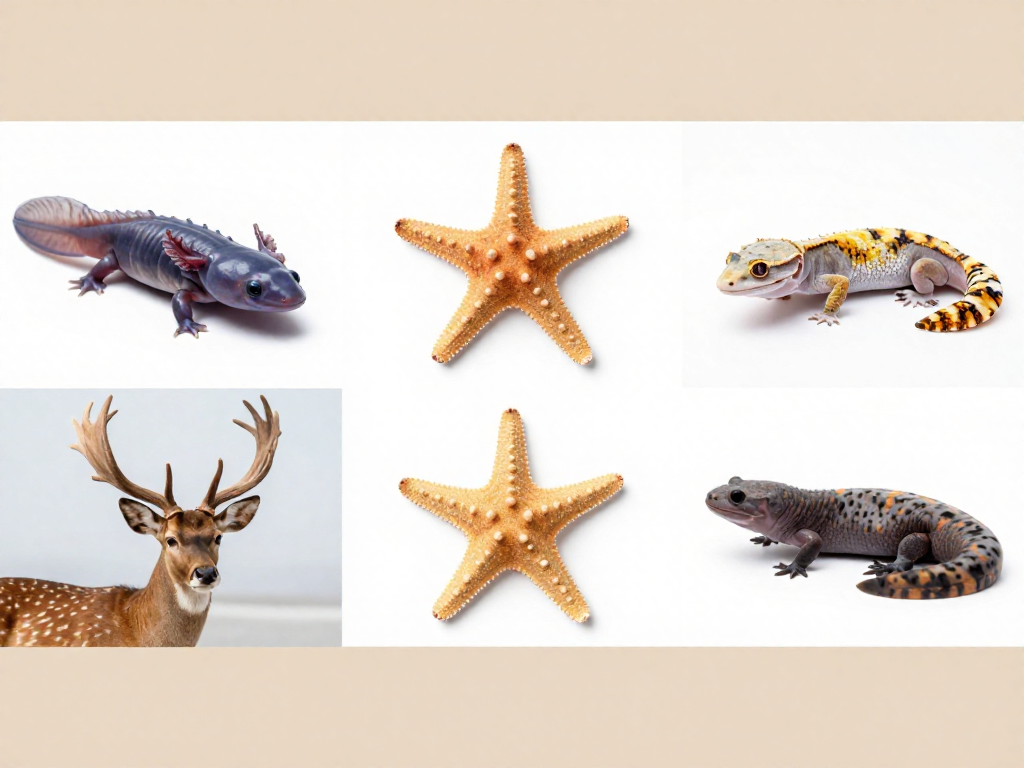
What "Regeneration" Actually Means (Quick Primer)
Imagine losing a finger and growing a brand-new one—bone, nerves, and all. A handful of animals do exactly that, and it's far more than a scab over a scrape.
When you heal a cut, your body patches the wound with scar tissue. Regeneration is the next level up: an animal rebuilds the entire missing structure, with working muscles, nerves, and blood vessels, until it's good as new.
The secret is special cells that can become almost any body part. Many regenerators form a blastema (a blob of these flexible, "anything-goes" cells) at the injury site, which then grows into the missing piece like a tiny construction crew.
These powers come in wildly different strengths. Some animals just regrow a tail or a limb. Others can rebuild an entire body from a single fragment.
So why can't we? Humans heal fast but mostly make scar tissue instead of new parts—we traded deep regeneration for quick repair long ago. Here's who didn't.
Axolotl: The Regeneration Superstar
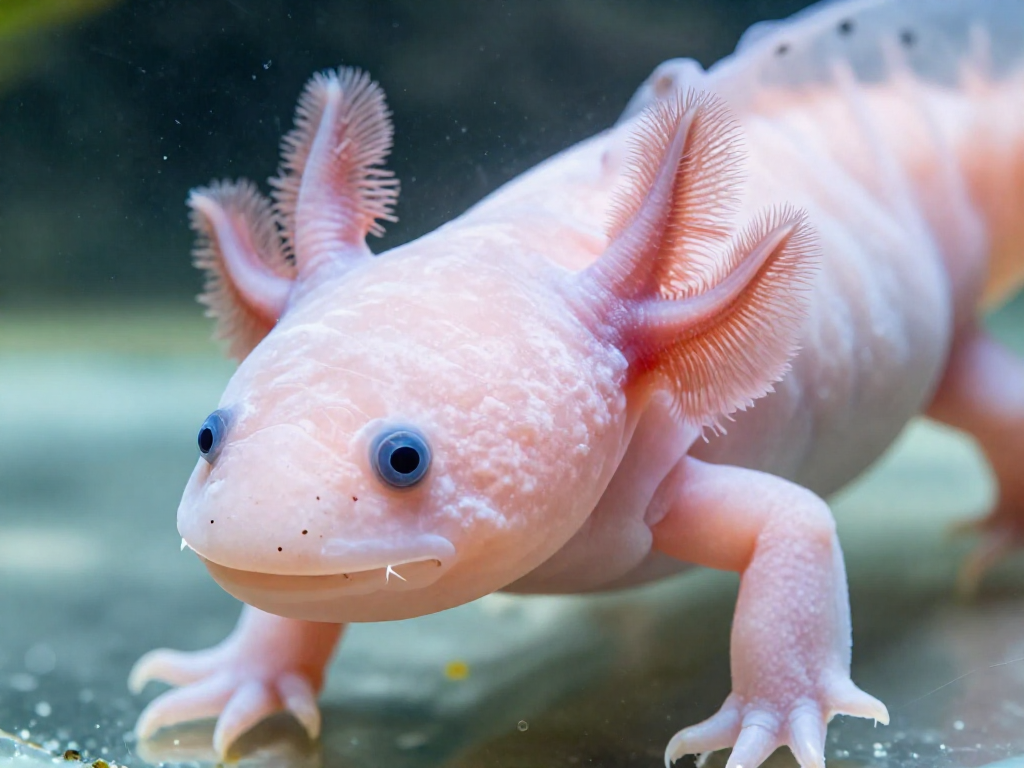
Lose a leg, and the axolotl just grows a new one—perfectly. This smiling, feathery-gilled salamander from Mexico can regrow not only limbs and tail, but also its jaw, spinal cord, and even parts of its heart and brain, with no scar left behind.
The secret is the blastema. When an axolotl loses a body part, nearby cells gather at the wound and form a blastema (a blob of unspecialized cells that can become whatever's needed). This cluster acts like a tiny construction crew, rebuilding bone, muscle, nerves, and skin in the right order until the new part matches the original. A fully regrown limb can appear in a matter of weeks.
Why scientists care: Humans share many of the same genes as axolotls, yet we form scars instead of new parts. Researchers study how axolotls "switch on" regeneration in hopes of one day helping people heal wounds, nerves, or even spinal injuries.
Starfish (Sea Stars): Rebuilding From an Arm
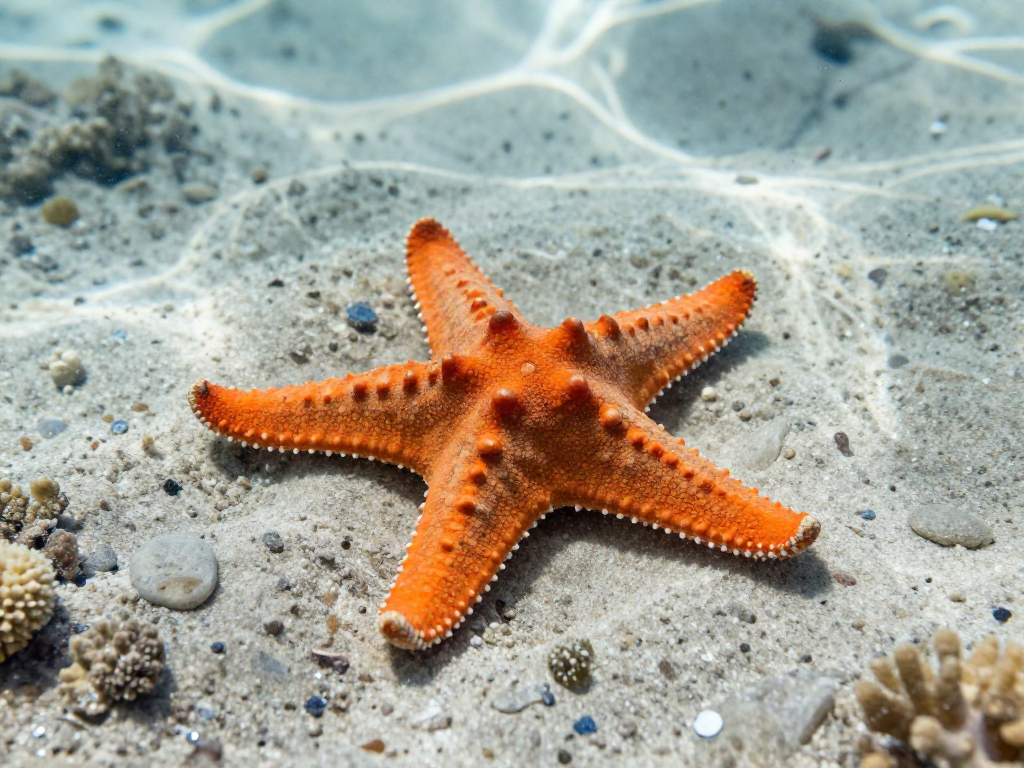
Lose an arm? No problem. Some sea stars can grow an entire new body from a single severed arm—as long as a piece of the central disc (the round hub where all the arms meet) goes with it. That means one star can, in a sense, become two.
Most sea stars regrow lost arms over several months to a year. But species in the genus Linckia take it further: a detached arm carrying part of the central disc can sprout four tiny new arms, creating a stubby "comet" shape before maturing into a full star.
Why the central disc matters so much: it holds the nerve ring and the start of the digestive and water-vascular systems the animal needs to rebuild everything else.
This trick does double duty. It lets sea stars survive predator attacks—and for a few species, it's also a way to reproduce, splitting one body into two living animals.
Lizards (Geckos & Skinks): The Famous Tail Drop
Here's a wild defense move: many lizards can ditch their own tails on purpose. When a gecko or skink gets grabbed, it can snap off its tail and leave the still-wriggling piece behind to distract a predator while it dashes to safety. Scientists call this trick autotomy (self-amputation along a built-in "break point" in the tail).
The escape works, but the replacement isn't a perfect copy. The original tail has small bones (vertebrae); the regrown one is supported by a single rod of cartilage (the flexible tissue in your ears and nose). That's why a regrown tail often looks slightly different — a bit shorter, smoother, or off-color.
Growing it back isn't free, either:
- The tail stores fat the lizard may need for energy.
- Regrowth pulls resources away from growth and reproduction.
- A new tail can take weeks to months to come in.
So while losing a tail beats losing your life, lizards don't drop them casually.
Planarian Flatworms: Cut It in Pieces, Get More Worms
Slice a planarian flatworm into pieces, and each fragment can grow into a whole new worm—head, brain, and all. Researchers have shown that a piece as small as about 1/279th of the original animal can rebuild a complete body, making these freshwater worms the undisputed champions of regeneration.
Their secret is a supply of neoblasts (adult stem cells that can turn into any cell type the body needs). Neoblasts make up roughly 20% of a planarian's cells and constantly stand ready to replace anything lost—including a brand-new brain.
That's why scientists love them. Because planarians seem to renew their bodies almost indefinitely, labs study them to understand aging, tissue repair, and what "biological immortality" might really mean.
- A tiny fragment can regrow an entire worm, including a new head and brain
- Powered by neoblasts, stem cells that become any tissue
- A go-to model for studying repair and longevity
Sea Cucumbers, Hydra, and More Underwater Regenerators
Some sea cucumbers defend themselves by violently throwing up their own guts—then growing a fresh set. When threatened, certain species eject their internal organs (a process called evisceration) to distract or entangle predators, and they can regrow that lost gut in a matter of weeks.
Even stranger is the hydra, a tiny freshwater relative of jellyfish about the length of a grain of rice. Hydra constantly replace their cells with new ones, essentially rebuilding their entire body over and over. Because of this nonstop renewal, scientists have found little sign that hydra age the way most animals do—a quirk that makes them a favorite subject in aging research.
A few bonus regenerators round out the underwater crew:
- Sponges can be pushed through a fine mesh into separate cells that then reassemble into a working sponge.
- Jellyfish polyps (the tiny, anchored early life stage) can bud off copies and regrow damaged parts.
In water, starting over is just part of survival.
Salamanders, Newts & Zebrafish: Limbs, Eyes, and Hearts
Imagine slicing the lens out of your own eye and growing a brand-new one. A newt (a small, semi-aquatic salamander) can do exactly that — and it can repeat the trick again and again over its lifetime. Scientists have regenerated newt eye lenses 18 times in the same animals and gotten a perfect new lens every time.
These are vertebrates — animals with backbones, just like us — which is why researchers find them so exciting:
- Newts regrow whole limbs, jaws, tails, spinal cord tissue, and even parts of the eye, including the lens and retina.
- Zebrafish regrow clipped fins in a couple of weeks and can repair injured heart muscle that would leave a permanent scar in a human heart.
Why do these examples matter most? Because their bodies are built much more like ours than a flatworm's is. By decoding how a zebrafish heals its heart, scientists hope to one day coax human tissue to do the same.
Crabs, Spiders & Deer: Everyday Regrowth You Might Have Missed
Regeneration isn't just an exotic, deep-sea trick — it's happening in tide pools, gardens, and backyards near you. Plenty of familiar land animals quietly regrow body parts, too.
- Crabs and lobsters can regrow lost claws and legs. The new limb develops folded up inside a tiny bud and "inflates" to full size at the next molt (when the animal sheds its hard shell to grow). It may take a few molts to reach the original size.
- Spiders can regrow legs after losing one to a predator or a tricky escape. Like crabs, they rebuild the limb across molts, so younger spiders that molt more often regrow legs fastest.
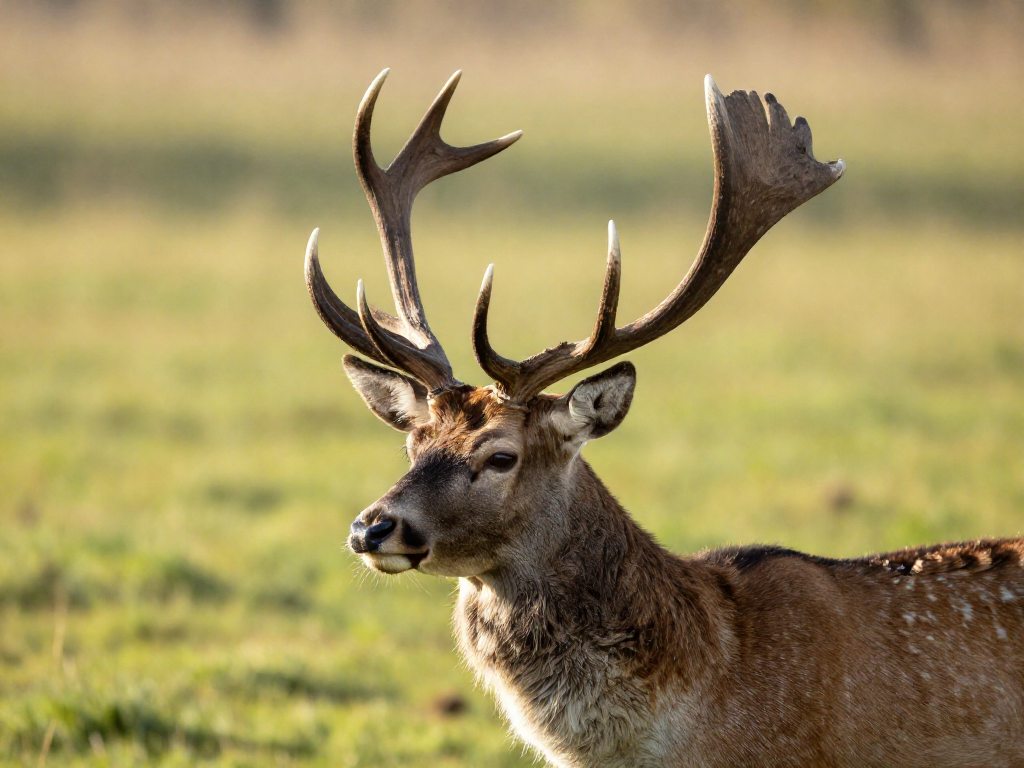
- Deer regrow an entire set of antlers every single year — the fastest bone growth known in any mammal, sometimes adding well over an inch a day during peak summer growth.
Same headline, wildly different toolkits.
So Why Can't Humans Regrow Limbs?
Here's the surprise: you already regenerate body parts every day. Your skin replaces itself constantly, and your liver can regrow most of its mass after part is removed. Young kids can even regrow the very tip of a fingertip, nail and all, if the wound is left to heal naturally.
So what stops us from regrowing a whole arm? It comes down to how we heal. When humans get a serious wound, we rush to seal it with scar tissue (tough collagen that patches the gap fast). Champion regenerators like axolotls do something different: their cells form a blastema (a blob of unspecialized cells that rebuilds the missing part from scratch). We make scars; they make blueprints.
That's exactly why scientists study these animals so closely. If researchers can figure out how a blastema switches on, the long-term hope is to coax human tissue—spinal cords, hearts, even limbs—to rebuild instead of scar.
See also
- Other Amazing Animal Facts listicles
- How axolotls stay 'forever young' (neoteny explainer)
- Animals with the longest lifespans
- Weirdest survival adaptations in the animal kingdom
- How deer antlers grow and shed each year
Related articles

My Unpopular Opinion: Stop Calling Them 'Killer' Whales
Why should we stop using the term 'killer whale'?
Jul 28, 2026 · 3 min read
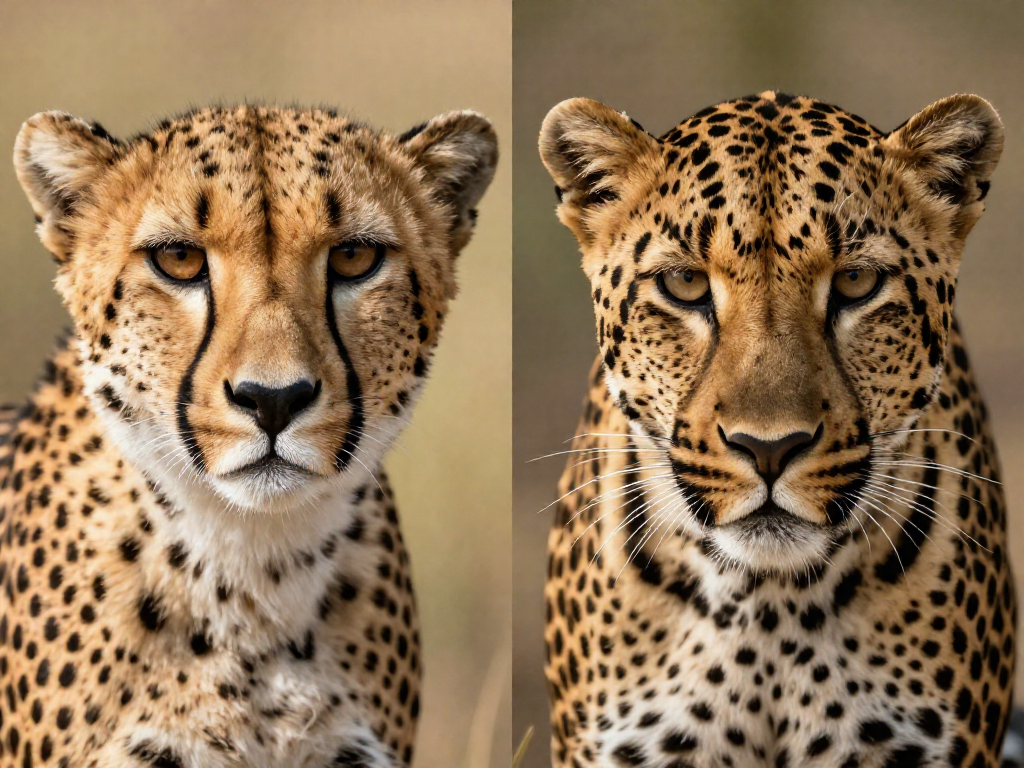
Cheetah vs. Leopard: Spotting the Difference in the Wild
How can you tell the difference between a cheetah and a leopard? Learn the key features including tear marks, spots, body shape, hunting styles, and sounds—all in one easy guide.
Jul 28, 2026 · 6 min read
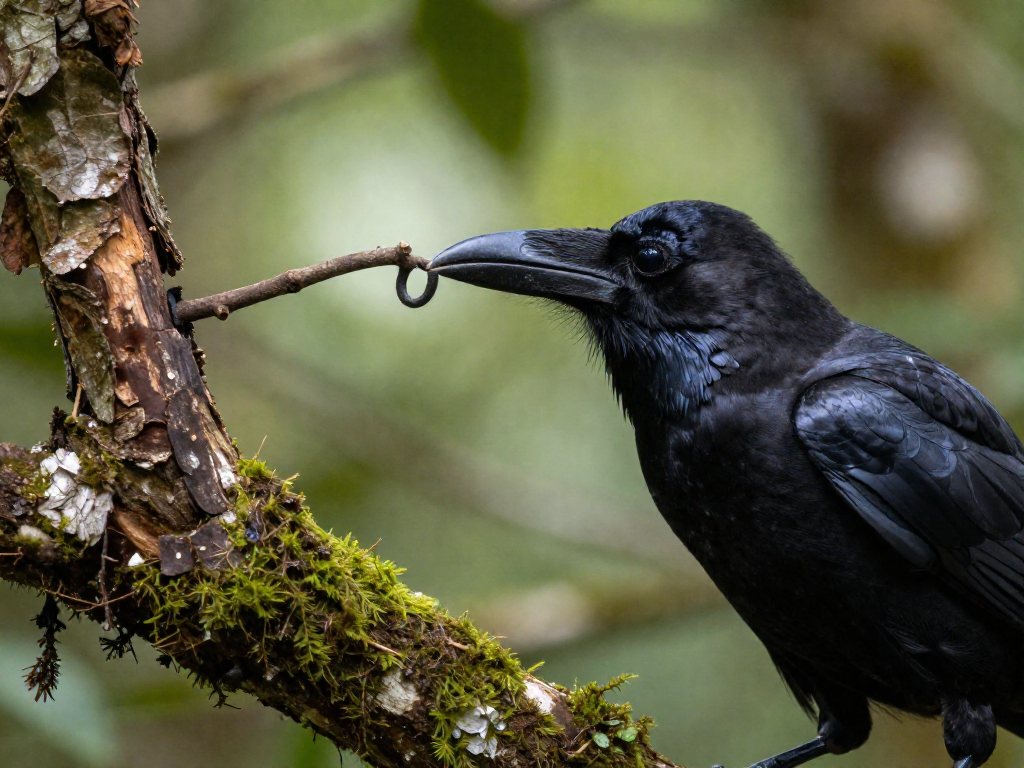
8 Animals That Use Tools (And What They Do with Them)
Which animals use tools, and how do they use them? From crows bending wires to octopuses carrying coconuts, discover 8 tool-using animals.
Jul 28, 2026 · 6 min read