15 Record-Breaking Animals: The Fastest, Biggest, and Loudest
Which animals hold the world records for speed, size, and other extremes?
On this page
Nature's Champions: Why These Records Matter
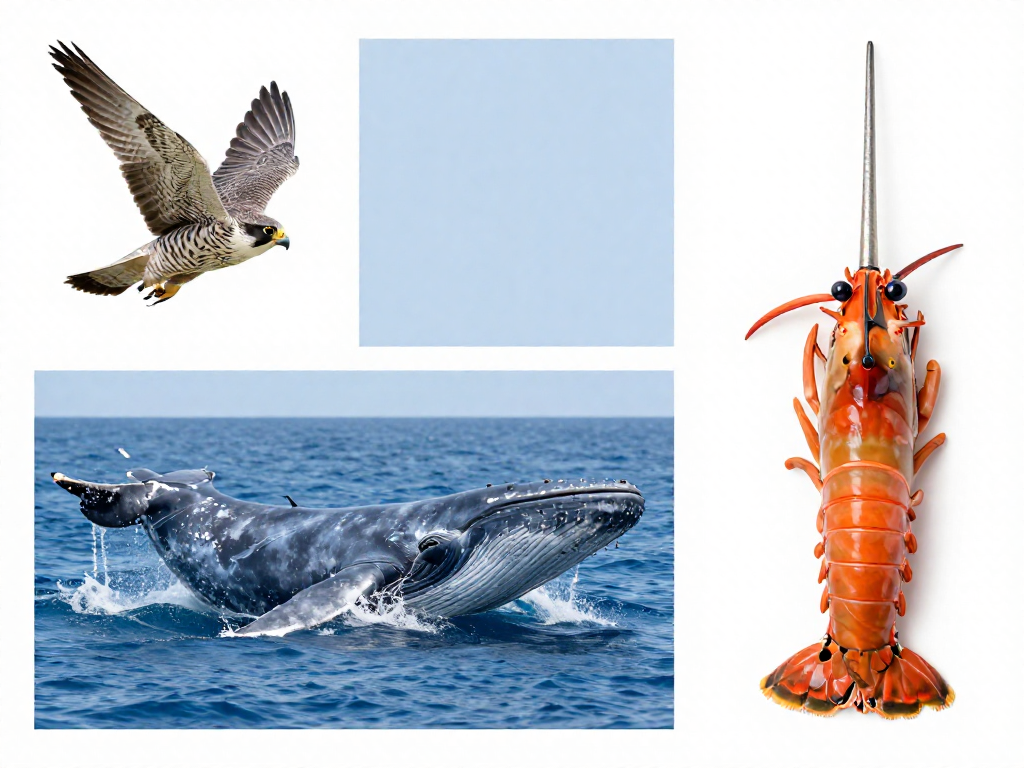
A falcon that dives faster than a race car. A whale louder than a jet engine. A creature so big its heart is the size of a small car. These aren't exaggerations—they're measured, record-breaking facts, and you'll meet all of them on this list.
Here's our promise: every record below comes with real, sourced numbers from scientists, museums, and wildlife experts—not vague "did you know" claims. When we say the peregrine falcon hits 240 mph in a dive, that's a documented measurement, not a guess.
But these extremes aren't just trivia. Each one is a survival adaptation honed over millions of years. Speed catches dinner (or escapes becoming dinner). Size deters predators. A booming call finds a mate across miles of dark ocean.
To keep things easy to explore, we've organized the list by category—speed, size, sound, and a few surprises in between. Ready to meet nature's champions? Let's start the countdown.
The Fastest Animals on Earth
The fastest animal on the planet isn't a cheetah—it's a bird that turns its own body into a dart. When a peregrine falcon folds its wings and plunges after prey, it can hit roughly 240 mph (386 km/h), making it the fastest animal of any kind. That's faster than a Formula 1 car at top speed.
But here's the catch: that record comes from a dive, not flight. So how do scientists actually measure animal speed?
Two ways to clock an animal:
- Dive speed – how fast something falls or stoops, with gravity helping. This is how the falcon earns its crown.
- Level speed – how fast something moves under its own power across flat ground, water, or air. This is the fairer test for "fastest runner" or "fastest swimmer."
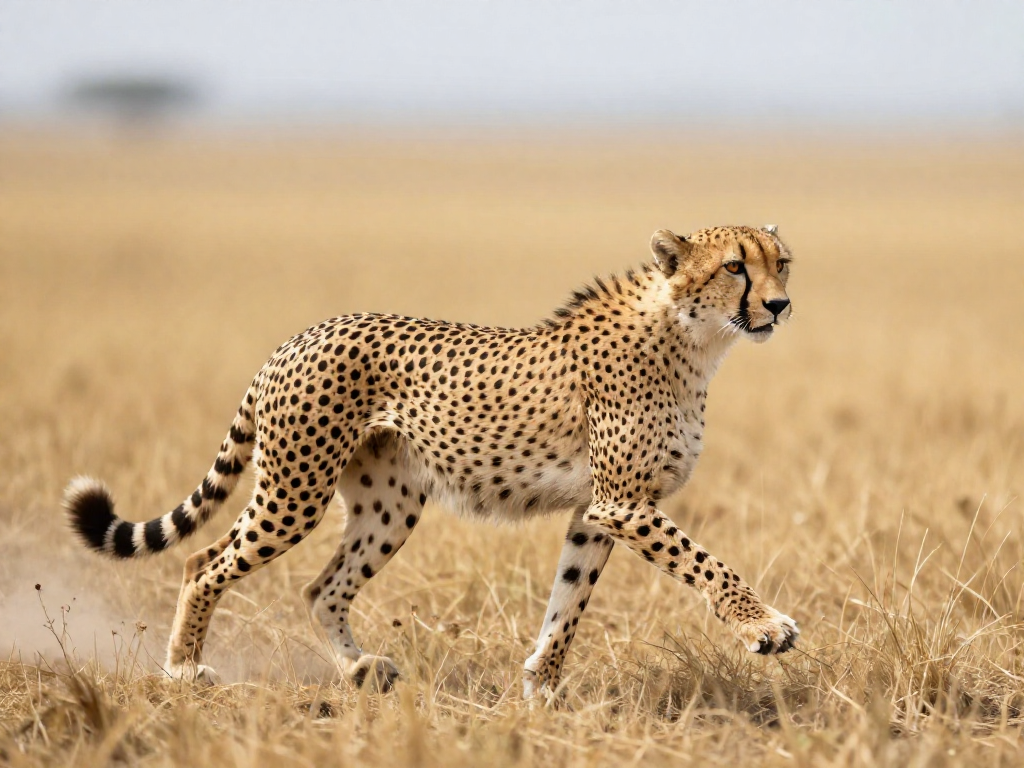
By the level-speed standard, the land champion is the cheetah, which sprints at about 70 mph (112 km/h)—but only in short bursts of 20–30 seconds before it overheats. Its lightweight frame, long stride, and semi-retractable claws (claws that don't fully tuck away, gripping like cleats) make it a living dragster.
In the water, the title is hotly debated, but the sailfish and black marlin are usually credited with the top speeds at around 68 mph (109 km/h) in quick bursts. Some of these figures come from older fishing-reel estimates, so researchers continue to refine them with modern tracking.
Quick speed leaderboard
| Animal | Speed | Category |
|---|---|---|
| Peregrine falcon | ~240 mph | Fastest overall (dive) |
| Cheetah | ~70 mph | Fastest on land |
| Sailfish / black marlin | ~68 mph | Fastest in water |
The takeaway? "Fastest" depends on the rules. Gravity-assisted dives, sprint bursts, and steady cruising are three very different races—and different animals win each one.
The Biggest and Heaviest Animals
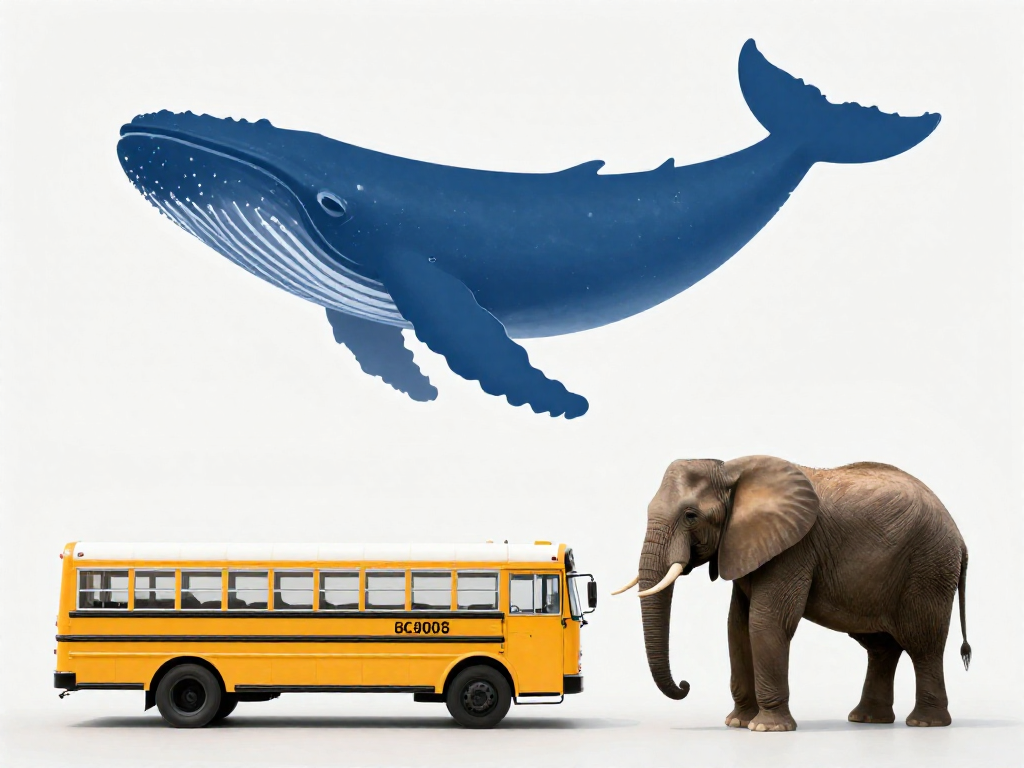
The biggest animal that has ever lived isn't a dinosaur — it's alive right now, swimming through the open ocean. The blue whale stretches up to about 100 feet long (roughly three school buses parked bumper to bumper) and can weigh around 200 tons. That's heavier than 30 African elephants stacked together, and its heart alone is about the size of a small car. No fossil of any dinosaur comes close.
On land, the African elephant takes the crown as the largest living land animal. Big bulls can weigh up to about 7 tons (around 14,000 pounds) and stand 10–13 feet tall at the shoulder — picture a creature that outweighs three pickup trucks yet can walk almost silently on padded feet.
Want the tallest animal? Look up — way up. The giraffe towers as high as 18 feet, with legs and a neck that are each taller than a grown adult. Its long neck has the same number of bones as yours (just seven), only each one is supersized.
In the fish world, the record goes to the whale shark. Despite the name, it's a true fish, not a whale, and it can reach about 40 feet long — roughly the size of a school bus. Even better, this gentle giant eats some of the ocean's tiniest food: plankton (microscopic drifting sea life) and small fish, filtering them from the water as it cruises.
Quick size scorecard:
- 🐋 Largest animal ever: Blue whale (~100 ft, ~200 tons)
- 🐘 Largest land animal: African elephant (~7 tons)
- 🦒 Tallest animal: Giraffe (up to ~18 ft)
- 🦈 Largest fish: Whale shark (~40 ft)
Sources: NOAA Fisheries, WWF, and Smithsonian's National Zoo.
The Loudest Animals
Imagine a sound so powerful it could rupture your eardrums from across a swimming pool—now imagine it coming from a shrimp barely two inches long. The animal kingdom's volume records are genuinely jaw-dropping, and the loudest creatures aren't always the biggest.
The deep-sea record holder. The sperm whale produces clicks measured at around 230 decibels underwater, making it the loudest animal on Earth. It uses these clicks like sonar (echolocation, or "seeing" with sound) to hunt squid thousands of feet down in pitch-black water.
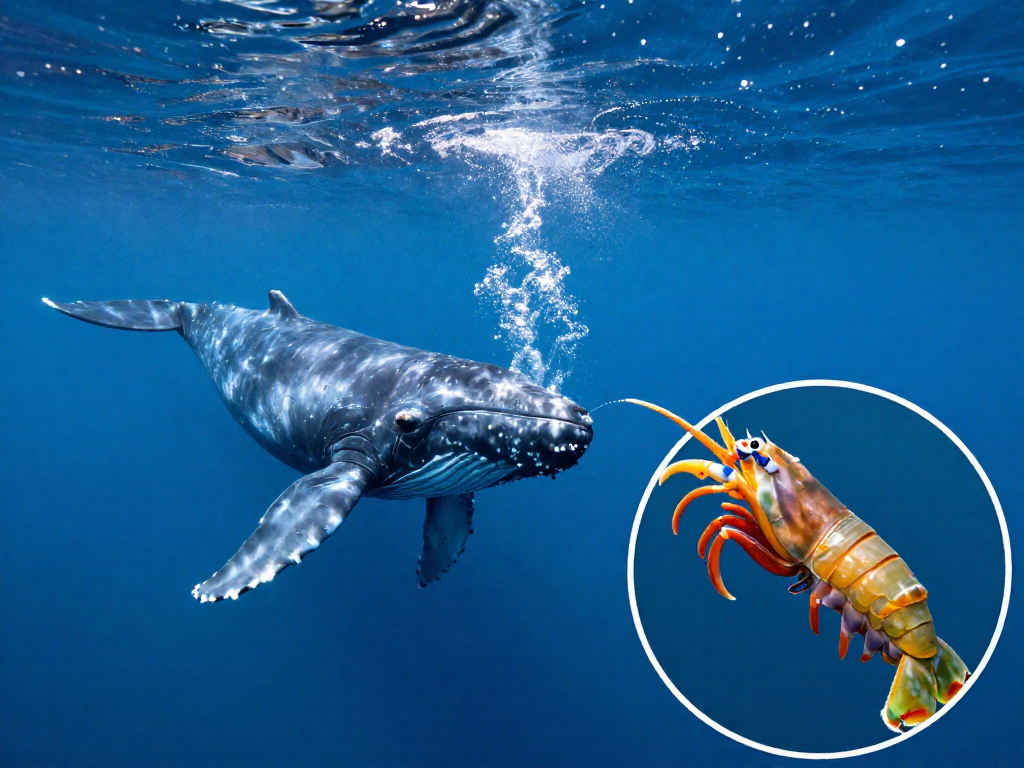
The tiny powerhouse. The pistol shrimp snaps one oversized claw so fast it creates a collapsing bubble that cracks at roughly 218 decibels—louder than an actual gunshot. The snap stuns or kills small prey, proving you don't need size to pack a punch.
The loudest on land. The howler monkey's roar can travel up to 3 miles through dense rainforest. Troops use these calls to claim territory without fighting, settling disputes by sheer volume instead of claws.
A quick note on decibels
Here's the catch: you can't directly compare underwater and on-land decibels. Sound behaves differently in water—it travels faster and is measured against a different reference point—so the whale's "230" isn't four times louder to your ears than a "60-decibel" conversation. Scientists adjust the numbers when comparing the two environments.
The takeaway? Whether it's a whale's deep-sea clicks or a shrimp's explosive snap, these animals turned sound into a survival superpower.
More Record-Breakers: Strongest, Longest-Lived, and Deadliest
Speed, size, and volume are just the beginning. Some animals win at staying alive for centuries, lifting absurd weights, or surviving the vacuum of space. Here are five more champions that round out our list of 15.
Strongest: The Dung Beetle
Pound for pound, the horned dung beetle is the strongest animal on Earth. One species, Onthophagus taurus, can pull 1,141 times its own body weight — the equivalent of a person dragging six fully loaded double-decker buses. Rhinoceros beetles are mighty too, hoisting roughly 850 times their weight, but the dung beetle still takes the crown.
Longest-Lived: Greenland Shark and the "Immortal" Jellyfish
The Greenland shark is the longest-living vertebrate (animal with a backbone) known to science. Radiocarbon dating of their eyes suggests they can live at least 250 to 400 years — meaning some sharks swimming today were alive before the United States existed.
For sheer staying power, though, nothing beats Turritopsis dohrnii, the so-called immortal jellyfish. When stressed or injured, it can revert to an earlier life stage and start over, potentially repeating the cycle indefinitely.
Deadliest: Box Jellyfish and Inland Taipan
The box jellyfish carries some of the most potent venom of any marine animal, with tentacles that can stretch up to 10 feet. On land, Australia's inland taipan holds the title for the most toxic snake venom — a single bite contains enough to fell many adult humans. (Reassuringly, this shy snake almost never encounters people.)
Longest Migration: The Arctic Tern
This tireless seabird flies from the Arctic to Antarctica and back every year, racking up around 44,000 miles annually. Over a lifetime, that's roughly three trips to the Moon and back.
Most Indestructible: The Tardigrade
Finally, the microscopic tardigrade (or "water bear") is nearly impossible to kill. It survives boiling heat, near-absolute-zero cold, crushing pressure, and even the radiation and vacuum of outer space — the only animal known to do so.
How Scientists Measure These Records
Here's the surprising part: many "world records" in the animal kingdom come with an asterisk. The numbers get refined, debated, and sometimes overturned as better tools arrive.
So how do researchers actually clock a champion?
- Speed: Scientists use radar guns, high-speed cameras (cameras that shoot hundreds or thousands of frames per second), and GPS tags strapped to animals to track real-world movement. The peregrine falcon's famous 240+ mph dive, for example, was captured with skydiver-mounted cameras.
- Size and weight: The biggest specimens are often measured from stranded animals washed ashore or from skeletons and preserved records kept in museums — not from living giants in the wild.
- Why records change: Many figures are estimates. A blue whale's weight is frequently calculated, not placed on a scale, so improved methods can revise the "official" number.
- Why the category matters: A "fastest animal" depends on how you define it — top dive speed, fastest on land, or fastest swimmer all crown different winners.
In short, every record reflects the best evidence we have today — and tomorrow's tools may rewrite it.
Quick Reference Table of Record-Holders
Want all 15 record-breakers in one glance? Here's your save-and-share cheat sheet. Bookmark it, pin it, or print it for the next family trivia night.
| Animal | Record | The Number |
|---|---|---|
| Peregrine falcon | Fastest animal (diving) | 240+ mph |
| Cheetah | Fastest land animal | 70 mph |
| Sailfish | Fastest fish | 68 mph |
| Blue whale | Largest animal ever | 100 ft / 200 tons |
| African bush elephant | Largest land animal | 13 ft tall / 6+ tons |
| Giraffe | Tallest animal | 18 ft |
| Colossal squid | Largest invertebrate | 1,100 lbs |
| Sperm whale | Loudest animal | 230 decibels |
| Blue whale | Loudest sustained call | 188 decibels |
| Howler monkey | Loudest land animal | 140 decibels |
| Pistol shrimp | Loudest for its size | 210 decibels |
| Dung beetle | Strongest (relative) | 1,141× its weight |
| Greenland shark | Longest-lived vertebrate | 270–500 years |
| Box jellyfish | Most venomous | Lethal in minutes |
| Ocean quahog clam | Oldest known animal | 500+ years |
Numbers reflect the highest reliably documented records from wildlife agencies and peer-reviewed studies.
See also
- Why the peregrine falcon dives faster than any other bird
- How blue whales eat tons of food without chewing
- The strangest survival adaptations in the animal kingdom
- Deadliest animals in the world and why they're so dangerous
- Tardigrades: the tiny creatures that can survive in space
Related articles
My Unpopular Opinion: Stop Calling Them 'Killer' Whales
Why should we stop using the term 'killer whale'?
Jul 28, 2026 · 3 min read
Cheetah vs. Leopard: Spotting the Difference in the Wild
How can you tell the difference between a cheetah and a leopard? Learn the key features including tear marks, spots, body shape, hunting styles, and sounds—all in one easy guide.
Jul 28, 2026 · 6 min read
8 Animals That Use Tools (And What They Do with Them)
Which animals use tools, and how do they use them? From crows bending wires to octopuses carrying coconuts, discover 8 tool-using animals.
Jul 28, 2026 · 6 min read