Glow-in-the-Dark Animals: 9 Creatures That Light Up
Which animals can produce their own light and why?
On this page
Two Ways Animals Glow: Bioluminescence vs. Biofluorescence
Here's the twist that makes this whole list click: not every "glowing" animal actually makes its own light. Some are tiny living flashlights, while others are more like glow-in-the-dark stickers that only shine when light hits them just right.
Bioluminescence is the showstopper — the animal produces its own light through a chemical reaction. Mix a molecule called luciferin (a light-emitting compound) with an enzyme called luciferase (the spark that triggers the reaction) and a little oxygen, and you get cold, glowing light with almost no heat. This is how fireflies blink and how deep-sea fish glimmer thousands of feet down.
Biofluorescence is a different trick. The animal doesn't make light — it absorbs light from an outside source, then re-emits it as a different color. Think of a scorpion or certain corals that suddenly blaze under a blacklight.
The quick visual cue:
- Bioluminescence works in total darkness. No outside light needed.
- Biofluorescence stays hidden until UV or blue light shines on it.
Keep this distinction in mind as you scroll: some creatures below truly make light, while others simply transform it.
1. Fireflies — Flashing to Find a Mate
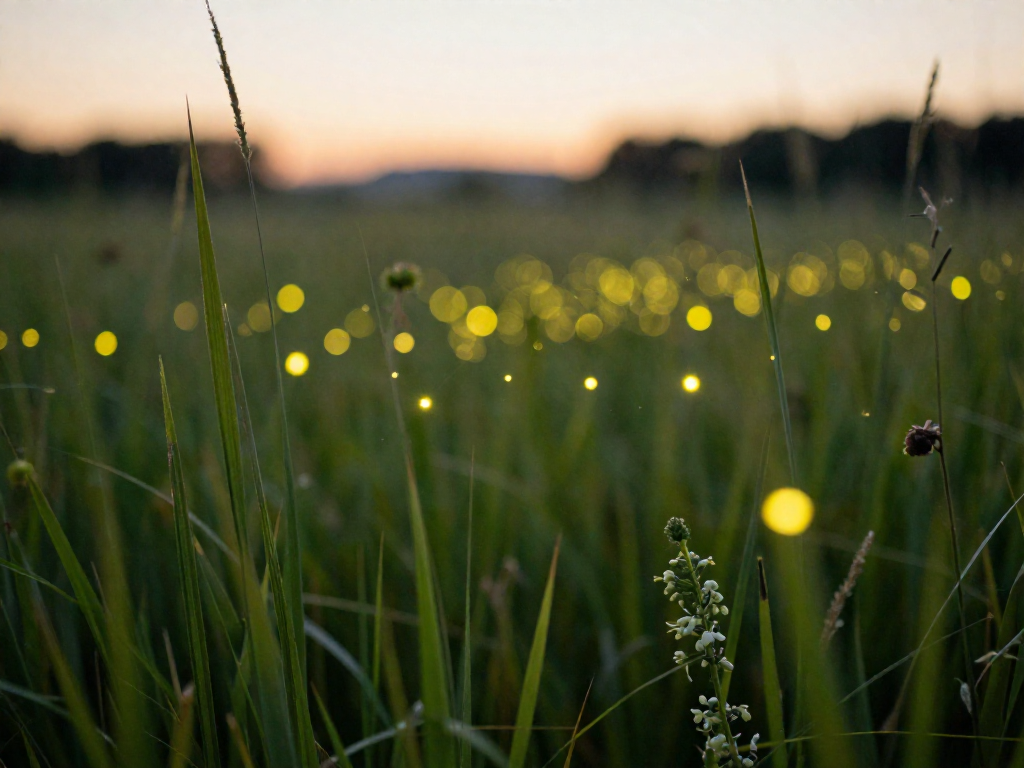
That twinkle drifting across a summer lawn is actually a tiny love letter. Each firefly (a type of beetle) glows from a special organ in its abdomen, where a light-producing chemical reaction lets it flash on and off like a living lantern.
Here's the romantic part: every species has its own flash "language." Males blink a signature pattern, and waiting females reply with their own timing, helping the right partners find each other in the dark.
- Cold light: Nearly 100% of the energy becomes light, with almost no wasted heat — far more efficient than a light bulb.
- Synchronized shows: In a few places, like Tennessee's Great Smoky Mountains, thousands of fireflies blink in unison, creating a rippling wave of light that draws visitors every year.
2. Anglerfish — A Living Fishing Lure
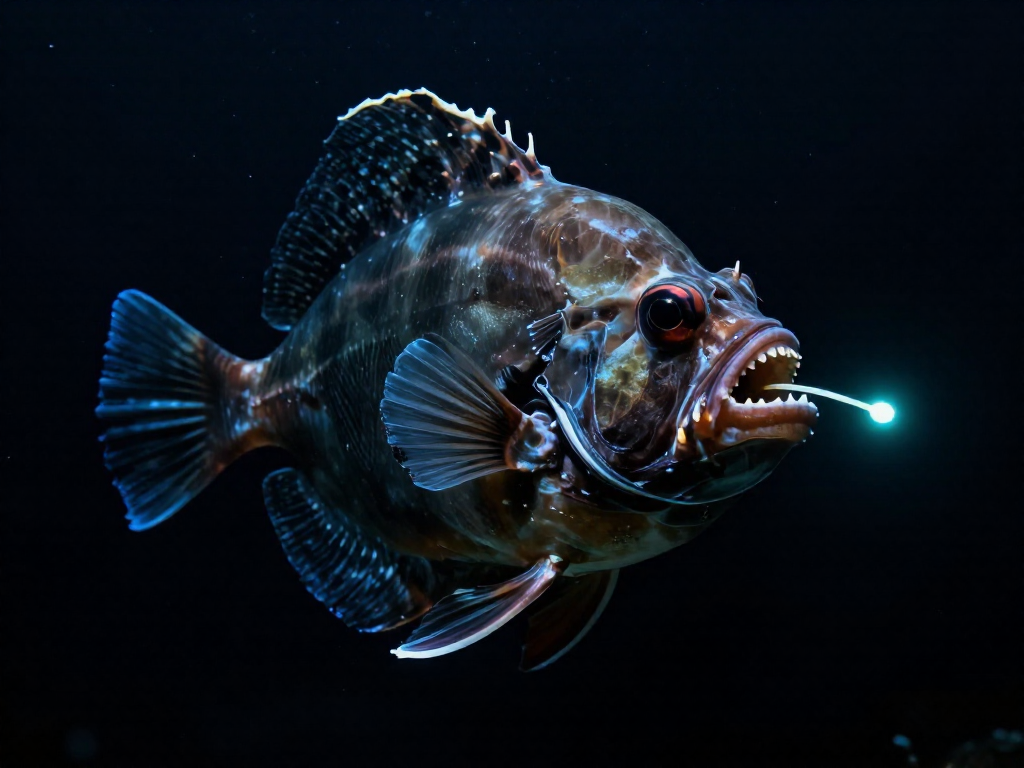
Imagine fishing in total darkness with a glowing rod that grows right out of your forehead. That's everyday life for the deep-sea anglerfish, which dangles a built-in lure to trick dinner into swimming straight to its jaws.
The light itself isn't made by the fish at all. It comes from billions of glowing bacteria living inside the tip of the lure — a partnership scientists call symbiosis (two species living together for mutual benefit). The fish gives the bacteria a home; the bacteria pay rent in light.
Down where anglerfish live — often more than 3,000 feet deep — sunlight never reaches. In that pitch-black world, a single glowing dot is irresistible to curious prey, turning light into a powerful trap.
Here's a surprising twist: only the females grow the famous lure. Males are tiny by comparison and skip the fishing rod entirely.
3. Jellyfish — Glowing for Defense
Imagine being chased and suddenly setting off a flare in your attacker's face. Some jellyfish do exactly that — a burst of light to startle predators and buy a getaway. Others use a clever trick scientists call a "burglar alarm": their glow draws in a bigger predator that may eat the original attacker.
This light comes in two flavors. Bioluminescence is light an animal makes itself through a chemical reaction, while biofluorescence is light absorbed and re-emitted as a different color. Jellyfish show off both.
One species changed science forever. The crystal jellyfish (Aequorea victoria) gave researchers Green Fluorescent Protein (GFP) — a glowing tag now used worldwide to light up living cells. That discovery earned the 2008 Nobel Prize in Chemistry.
4. Glowworms — Living Constellations in Caves
Step into New Zealand's Waitomo Caves and the ceiling looks like a starry night sky — but those "stars" are hungry larvae. Glowworms (the larval stage of fungus gnats, not actual worms) produce a soft blue-green light through bioluminescence (a chemical reaction that makes living things glow).
Here's the clever part: each larva dangles sticky silk threads, sometimes dozens of them, and its glow lures flying insects straight into the trap. The hungrier the glowworm, the brighter it shines — an empty stomach means a stronger sales pitch.
And despite the shared nickname, these cave-dwellers aren't the same as adult fireflies; they're a completely different group with their own light-making trick.
- See it yourself: Waitomo, New Zealand, is the most famous glowworm cave display.
5. Lanternfish — The Ocean's Hidden Glowers
There may be more lanternfish in the sea than any other vertebrate (animal with a backbone) on Earth. These small, deep-sea swimmers are studded with tiny light-producing spots called photophores that run along their bellies and sides.
Their glow is a clever survival trick known as counter-illumination: by lighting up their undersides to match the faint light filtering down from above, lanternfish erase their own silhouette. A predator looking up from below sees only an evenly lit ocean instead of a dark, fish-shaped shadow.
Despite their small size, lanternfish matter enormously. They're a key link in ocean food webs, feeding on tiny plankton and becoming dinner for squid, tuna, penguins, and seals.
6. Crystal Coral and Reef Fish — Biofluorescence in Color
Shine a blue light on a coral reef at night and it bursts into neon green, orange, and red — like a hidden rave that's invisible in normal light. This is biofluorescence (absorbing one color of light and re-emitting it as another), and it's different from the glow made by fireflies or jellyfish. Corals and certain reef fish soak up blue light and beam it back in warmer hues.
Why do they do it? Scientists are still piecing it together, but the leading ideas include:
- Communication — signaling to others of their kind
- Camouflage — blending into a fluorescing reef
- Sun protection — converting harsh light into safer wavelengths
The catch: you can't see it with the naked eye. Divers use special blue lights and yellow filter lenses to reveal the colors, which is why these glowing reefs stayed hidden for so long.
7. Scorpions — Glowing Under UV Light
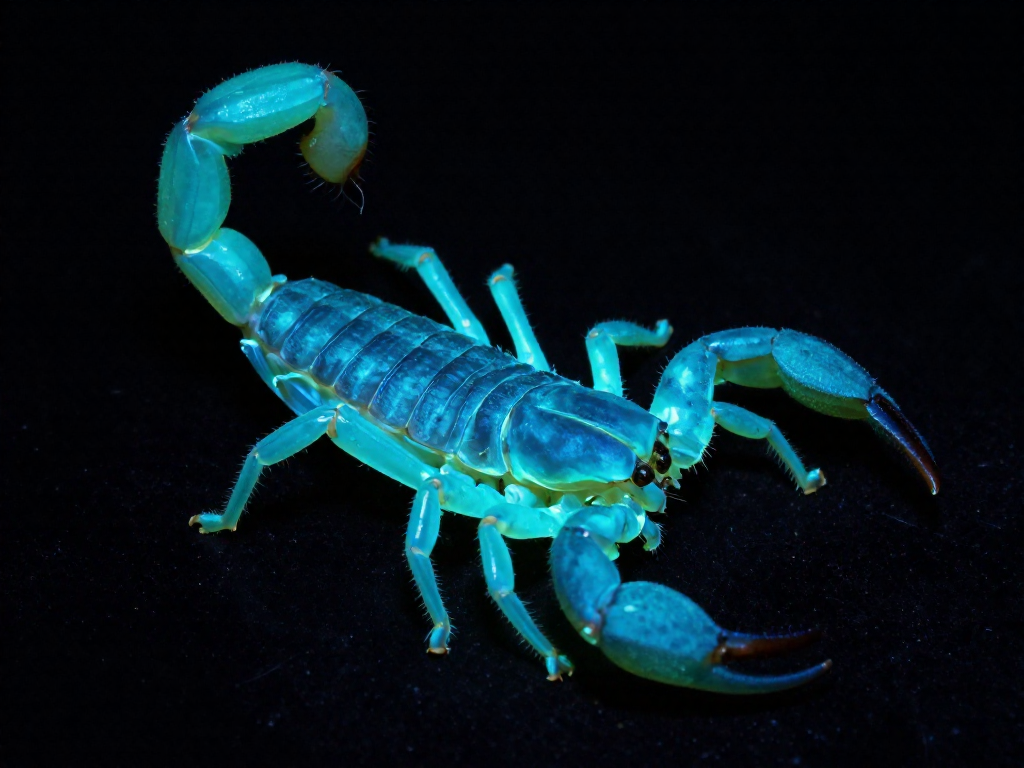
Shine an ultraviolet flashlight on a scorpion in the dark, and the whole creature lights up an eerie, electric blue-green. It's one of nature's strangest party tricks — and it works on nearly every scorpion on Earth.
The glow comes from biofluorescence (absorbing invisible UV light and re-emitting it as visible color). Special compounds packed into the scorpion's cuticle — the thin outer layer of its hard exoskeleton — are the source. Even fossilized scorpions and freshly molted ones can still glow.
Why they do it is still an open question. Leading ideas include using their whole body as a UV detector to sense light levels, helping them find safe hiding spots, or avoiding predators. No single theory has won out yet.
One thing is certain: researchers love it. On night surveys, scientists sweep UV lamps across the desert to spot glowing scorpions that would otherwise be invisible in the dark.
8. Dinoflagellates — The Glowing Tides
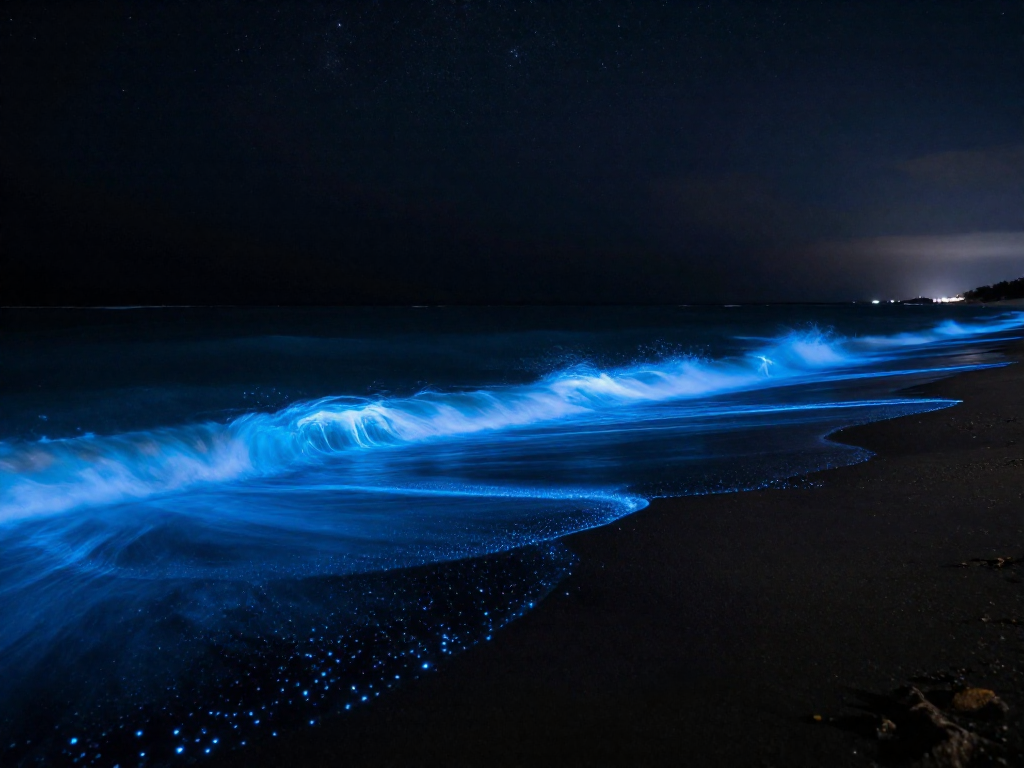
Have you ever seen a wave break into a curtain of electric-blue sparks? That otherworldly glow comes from dinoflagellates — single-celled plankton (microscopic drifting organisms) so tiny that millions can fit in a single bucket of seawater.
When the water around them is disturbed by a wave, a swimming fish, or your own hand, they flash a brief burst of blue light. Scientists think this is a defense trick: the sudden flash may startle predators or act like a "burglar alarm," drawing in bigger animals that eat whatever is attacking the plankton.
You can witness it for yourself in a few special spots. Mosquito Bay on the island of Vieques, Puerto Rico, is one of the brightest bioluminescent bays on Earth, and similar glowing waters appear seasonally in places like California and Florida.
- Tiny plankton that flash blue when disturbed
- They create bioluminescent bays and glowing waves
- The light is a built-in defense response to movement
- Best seen on dark, moonless nights with a local guide
9. Sharks — Secret Glowers of the Deep
Picture a shark longer than a refrigerator silently glowing in the pitch-black ocean. It's real: in 2021, scientists confirmed that the kitefin shark — at up to about 5.9 feet (1.8 m), the largest known luminous vertebrate — produces its own light, alongside smaller relatives like lanternsharks.
How does a glowing shark stay hidden? With a clever trick called counter-illumination (lighting up the belly to match the faint light filtering from above). To a predator looking up from below, the shark's glowing underside blends into the bright surface water, erasing its silhouette.
Most of this light is true bioluminescence (light made by the animal's own body chemistry). Some sharks also show biofluorescence (absorbing light and re-emitting it as a different color), so a few species literally glow green under the right blue light.
A perfect, jaw-dropping note to end on: even the ocean's famous hunters have a secret, softly glowing side.
Why Do Animals Glow? The Big Picture
If you lined up all nine of these glowing creatures, you'd find they're solving surprisingly different problems with the same trick: light. Across the animal kingdom, the same glow can be a love song, a trap, or a magic disappearing act.
Here are the big reasons animals light up:
- Attracting mates. Fireflies flash species-specific patterns so they can find the right partner in the dark.
- Luring prey. Anglerfish dangle a glowing lure, and cave glowworms hang sticky, light-tipped "fishing lines" to draw in insects.
- Defense and distraction. Some jellyfish and dinoflagellates flash to startle attackers or spotlight them for bigger predators.
- Camouflage by counter-illumination. Lanternfish and certain deep-sea sharks glow softly on their bellies to erase their shadow against faint light from above.
- Communication and mystery. Many glows likely serve as signals, and scientists are still working out exactly why some species shine at all.
The takeaway: glowing isn't one behavior. It's a versatile survival tool that evolution has reinvented again and again.
See also
- Deep-sea creatures that survive crushing pressure
- Animals with the weirdest survival superpowers
- How fireflies make light without heat
- Strangest animals living in the deep ocean
- Animal camouflage: nature's best disguises
Related articles
My Unpopular Opinion: Stop Calling Them 'Killer' Whales
Why should we stop using the term 'killer whale'?
Jul 28, 2026 · 3 min read
Cheetah vs. Leopard: Spotting the Difference in the Wild
How can you tell the difference between a cheetah and a leopard? Learn the key features including tear marks, spots, body shape, hunting styles, and sounds—all in one easy guide.
Jul 28, 2026 · 6 min read
8 Animals That Use Tools (And What They Do with Them)
Which animals use tools, and how do they use them? From crows bending wires to octopuses carrying coconuts, discover 8 tool-using animals.
Jul 28, 2026 · 6 min read