How Animals Defend Themselves: Armor, Spines, and Stink
What defensive adaptations do animals use to avoid being eaten?
On this page
Why Defense Is a Matter of Life and Death
For a wild animal, every meal it isn't is a victory. In nature, the difference between breakfast and becoming breakfast comes down to a single question: can you avoid being eaten?
This pressure drives an evolutionary arms race—a slow, back-and-forth contest where predators get better at catching prey, and prey get better at not being caught. Over countless generations, a faster cheetah pushes gazelles to be quicker, and well-defended prey pushes predators to find new tricks. Neither side ever truly "wins."
Running and hiding work great—until they don't. A slow-moving animal, a creature that can't outrun a hungry fox, or one caught in the open needs another plan. That's where built-in defenses come in: protection an animal carries with it everywhere it goes.
In this article, we'll explore three of the most jaw-dropping strategies:
- Armor — physical shields, plates, and shells that turn a body into a fortress
- Spines — sharp, painful deterrents that make a predator think twice
- Stink — chemical warfare that fights back with foul smells and sprays
(We're saving camouflage and venom for their own articles—they each deserve the spotlight.) Let's dig in.
Armor: Built-In Body Shields
One beetle can survive being run over by a car. The diabolical ironclad beetle's exoskeleton (its hard outer shell) can withstand forces around 39,000 times its own body weight, thanks to interlocking, jigsaw-like joints studied by researchers at UC Irvine in 2020. For animals that can't outrun a predator, the next best plan is simple: become impossible to bite, crush, or crack open.
Rolling Fortresses
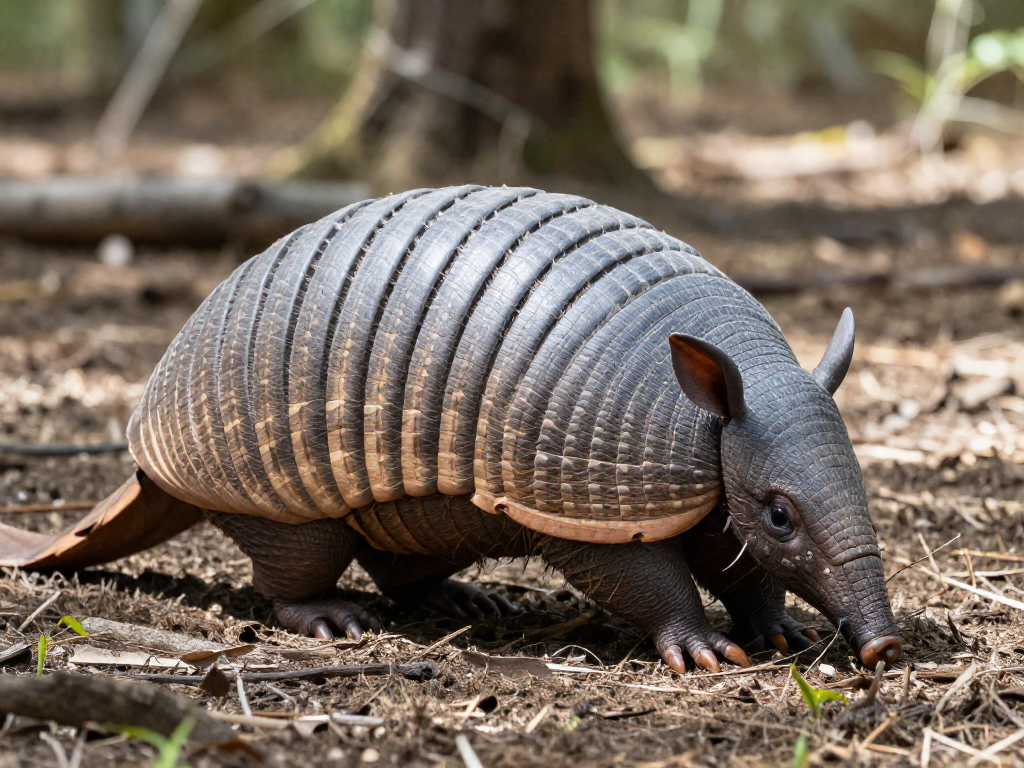
Some animals turn their armor into a sealed container. The three-banded armadillo is the only armadillo that can curl into a complete ball, tucking its head and feet inside so all a predator meets is a smooth dome of bony plates. Pangolins do something similar with overlapping scales made of keratin (the same material as your fingernails), wrapping into a pinecone-shaped ball so tough that even lions usually give up.
Shells, Scales, and Bony Plates
Turtle and tortoise shells aren't just helmets the animal wears — they're part of the skeleton. The shell is built from roughly 50 fused bones, including the ribs and spine, topped with keratin plates called scutes. That's why a turtle can't crawl out of its shell.
Other animals layer their protection differently:
- Crocodiles and alligators carry osteoderms — bony deposits embedded in the skin — that act like built-in chainmail across the back.
- Many fish overlap thin, flexible scales that spread out the force of a bite, letting the body bend while still resisting teeth.
- Beetles rely on a rigid exoskeleton that protects from above while supporting the whole body, like wearing your skeleton on the outside.
The Trade-Off: Safety vs. Speed
Armor isn't free. All that bone and keratin is heavy, so armored animals tend to be slow and steady rather than quick. A tortoise will never sprint, and an armadillo won't win a footrace. But when your defense is a portable fortress, you don't need to run — you just need to wait out the threat. It's one of nature's oldest bargains: trade quickness for staying power.
Spines and Spikes: Don't Touch Me
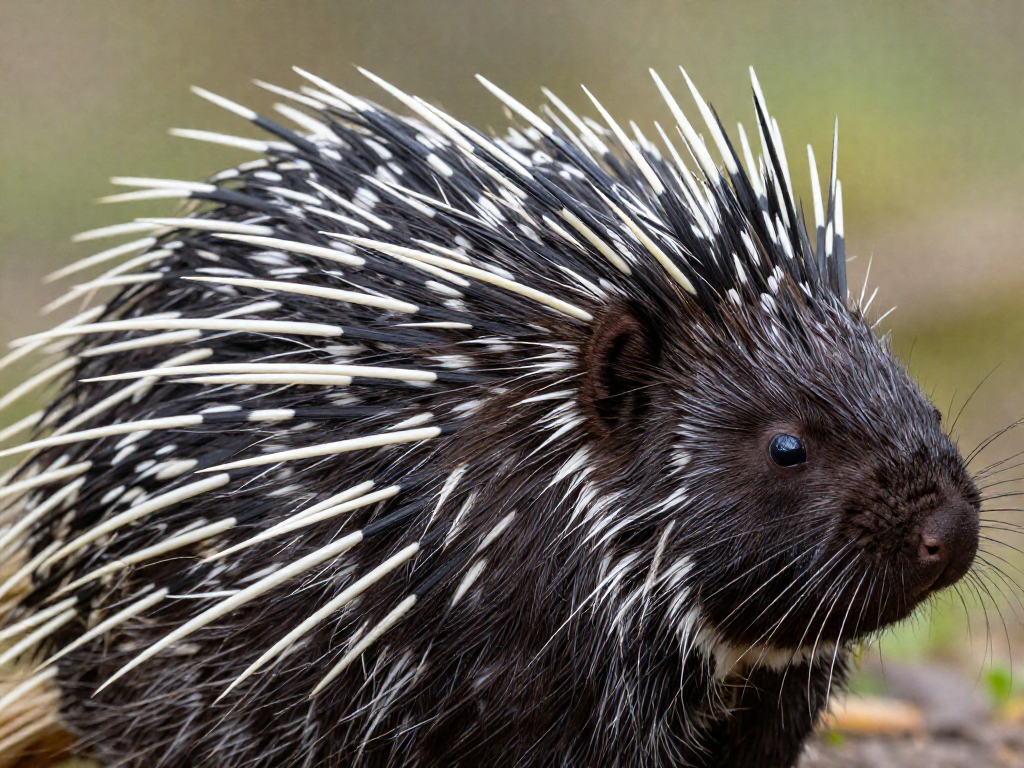
Here's a fact that ends a lot of campfire arguments: porcupines cannot shoot their quills. No quill-launching, no projectiles—that's pure myth. Instead, a North American porcupine wears roughly 30,000 loosely attached quills that snap free the instant a predator makes contact, leaving the attacker with a painful, hard-to-remove souvenir.
What makes those quills so effective is the tip. Each one ends in microscopic backward-facing barbs (tiny hooks, like the teeth on a fishhook) that let the quill slide in easily but fight every attempt to pull it out. A predator that takes a faceful of quills can be left unable to eat—so most learn the lesson once and never try again.
Plenty of other animals turn "sharp" into a survival strategy:
- Hedgehogs and tenrecs roll into a tight, spiky ball, tucking the soft face and belly inside a fortress of spines so there's no safe place to bite.
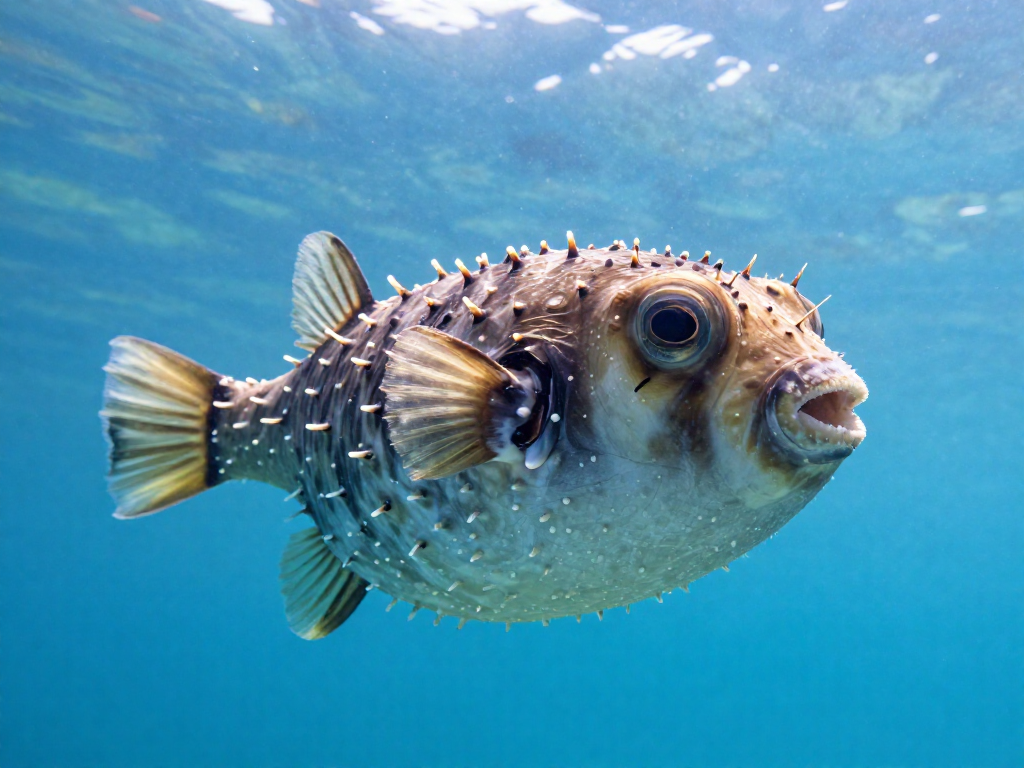
- Pufferfish combine two tricks at once: they gulp water to inflate into a balloon several times their normal size, and that swelling pops out spines that are normally folded flat against the body.
- Spiny lizards, sea urchins, and stinging caterpillars prove the design works across the animal kingdom—on land, on the seafloor, and even on a leaf in your backyard.
Notice a pattern? Spines rarely work alone. They're usually paired with a warning—a hedgehog's huff and curl, a pufferfish's dramatic balloon act, a caterpillar's bright "do-not-eat-me" colors. The point isn't to fight; it's to be so obviously not worth the trouble that the predator gives up before anyone gets hurt. A good defense, after all, is one you never actually have to use.
Quick takeaway: Spines and spikes are passive armor with attitude—they make a meal painful, not impossible, and the warning display does most of the real work.
Stink and Chemical Warfare
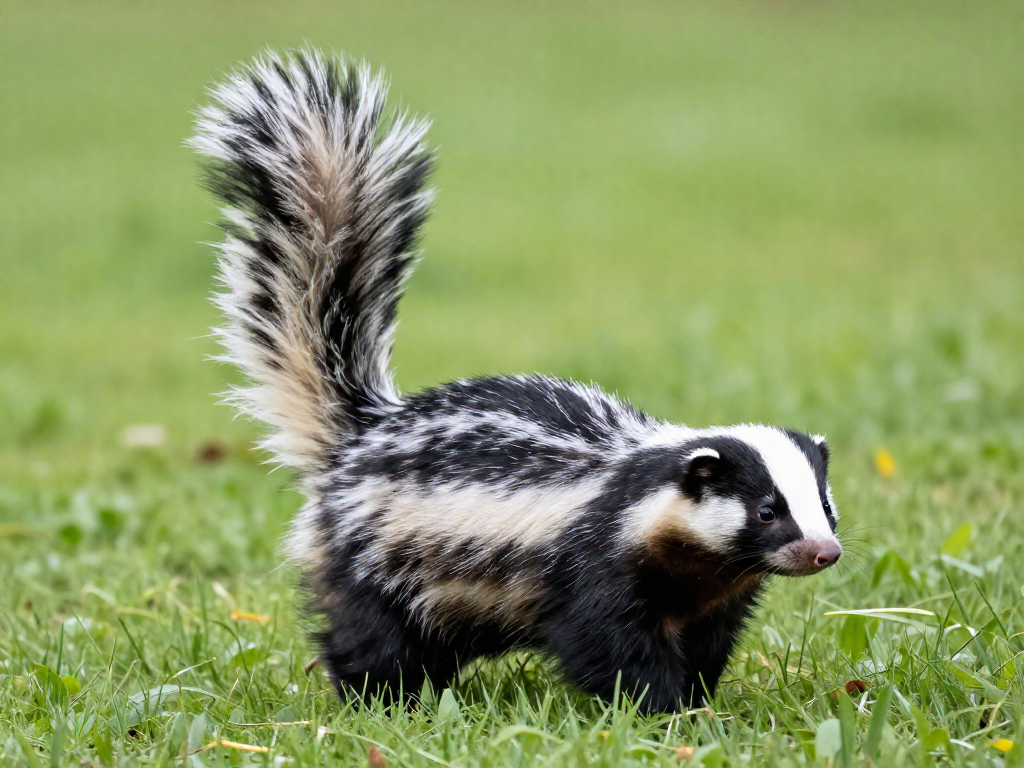
A skunk can hit a target with a foul-smelling spray from up to 10 feet (3 meters) away — and that's just one entry in nature's chemical weapons catalog. When you can't outrun or out-armor a predator, sometimes the best defense is to be too disgusting (or too dangerous) to mess with.
Skunks: precision spray, not random stink. A skunk's spray comes from two glands near the base of its tail, and the animal can aim it. The oily liquid contains sulfur compounds called thiols (the same family of chemicals that make rotten eggs reek), which is why the smell clings and lingers. Skunks usually warn first — stamping, hissing, and raising the tail — and only fire as a last resort, because each one carries a limited supply.
Bombardier beetle: a boiling chemical blast. This beetle mixes two chemicals in a special internal chamber, triggering a reaction that erupts as a spray reaching roughly 212°F (100°C) — the boiling point of water. It fires in rapid pulses with an audible pop, aimed accurately at whatever is attacking. Scientists have studied its "combustion chamber" as inspiration for engineering.
Stink bugs and millipedes. Stink bugs release a pungent odor from glands on their thorax (the body section between head and abdomen) when threatened or squished. Many millipedes go a step further, secreting compounds that release hydrogen cyanide — genuinely toxic — and some even smell faintly of almonds as a result.
Why stink works so well. Chemical defense is cheap to maintain, works at a distance, and protects against many predators at once without the animal having to fight. A predator that gets sprayed or sickened once tends to remember the lesson — meaning the defense often works the next time without being used at all.
Surprising Combo Defenders
Why settle for one defense when you can stack three? Some animals layer multiple survival tricks, turning a single attack into a frustrating obstacle course for any predator.
Take the pufferfish. When threatened, it gulps water to balloon up to several times its normal size, popping out sharp spines along the way. Many species are also loaded with tetrodotoxin (a potent natural poison)—one of the deadliest toxins in the animal kingdom. Spiny, swollen, and poisonous: that's a hard "no thanks" for most predators.
The hairy frog of Central Africa goes even further. When grabbed, it can fracture the bones in its toes and push the sharp ends through its own skin to create temporary claws. Scientists nicknamed it the "horror frog" for this dramatic, Wolverine-style trick.
The Virginia opossum mixes behavior with chemistry. Faced with danger, it can involuntarily flop over "playing dead" while leaking a foul, rotting-carcass smell from its glands—making itself look and smell utterly unappetizing.
Even small caterpillars double up, combining irritating spines with chemical defenses that sting or sicken would-be eaters.
The lesson? Layering strategies multiplies the odds of survival. A predator might shrug off one defense, but spines and toxin and a surprise act of theater? That combo buys precious time to escape—and live to defend another day.
What These Defenses Teach Us
Here's the twist: the scariest-looking defense isn't always the best one. Every shield, spike, and stink bomb comes with a price tag—armor is heavy, spines take energy to grow, and chemical sprays must be refilled. In nature, a defense only sticks around if its survival payoff beats its cost. That's why a pangolin's scales and a skunk's spray both work: each fits the animal's lifestyle, predators, and budget.
This balancing act inspires our own inventions, too. Engineers studying biology to design technology (a field called biomimicry) have looked at armadillo armor and tough natural materials to imagine flexible body armor, impact-resistant coatings, and lightweight protective gear.
The big takeaway? Animal defenses are clever solutions to a life-or-death math problem—and they're just one corner of the toolkit.
Hungry for more? Explore our other guides on animal superpowers, from super senses to record-breaking speed, and keep wondering.
See also
- How Animals Use Camouflage to Disappear
- Venomous vs. Poisonous: What's the Difference?
- Animal Superpowers: The Strongest Bites in Nature
- How Pangolins Became the World's Most Trafficked Mammal
- Why Skunks Smell So Bad (and How It Helps Them)
Related articles
How Do Spiders Make Silk? The Chemistry Behind Nature's Strongest Fiber
How do spiders produce silk, and what makes it so strong?
Jul 28, 2026 · 10 min read
How Electric Eels Generate Shocks: A Deep Dive into Nature’s Living Batteries
How do electric eels produce electricity?
Jul 28, 2026 · 10 min read
Why Don't Woodpeckers Get Headaches? The Built-In Shock Absorbers
How do woodpeckers avoid brain injury despite repeated hammering?
Jul 20, 2026 · 6 min read