Why Don't Woodpeckers Get Headaches? The Built-In Shock Absorbers
How do woodpeckers avoid brain injury despite repeated hammering?
On this page
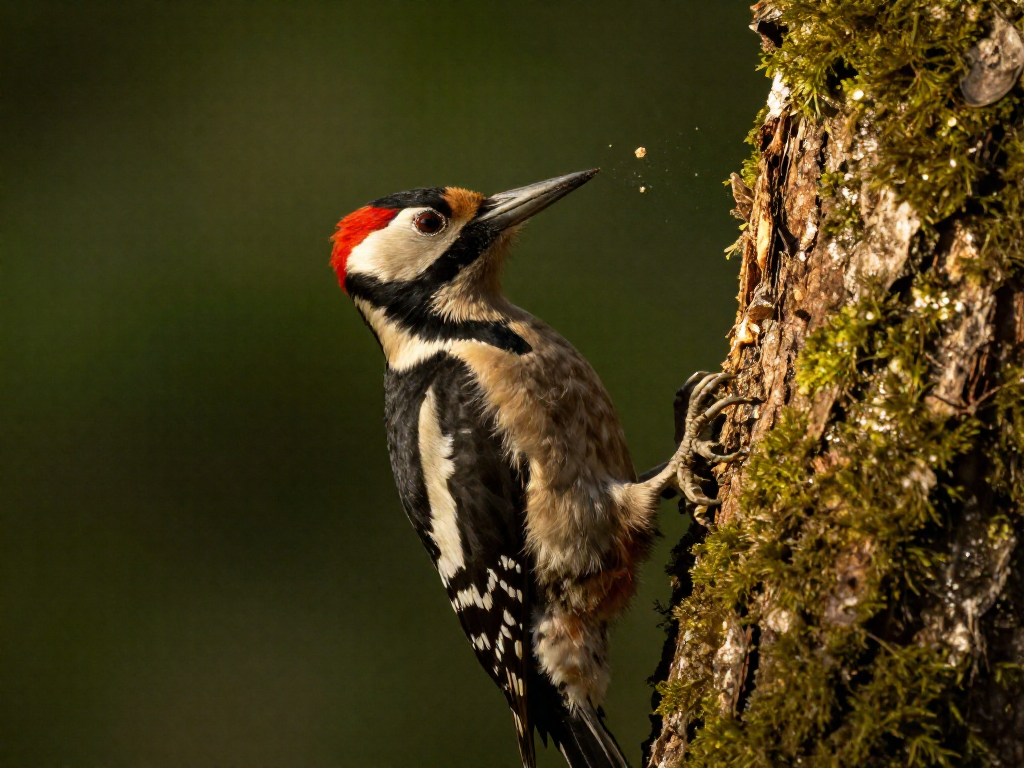
Start with the mind-boggling stats: a woodpecker's head hits at 20 ft/s, enduring 1200 Gs—force that would cause massive brain damage in humans. Yet they drum thousands of times a day without so much as a headache. How? The answer is a marvel of evolutionary engineering, but new research is turning our understanding upside down.
The Head-Banging Numbers: More Force Than a Fighter Jet
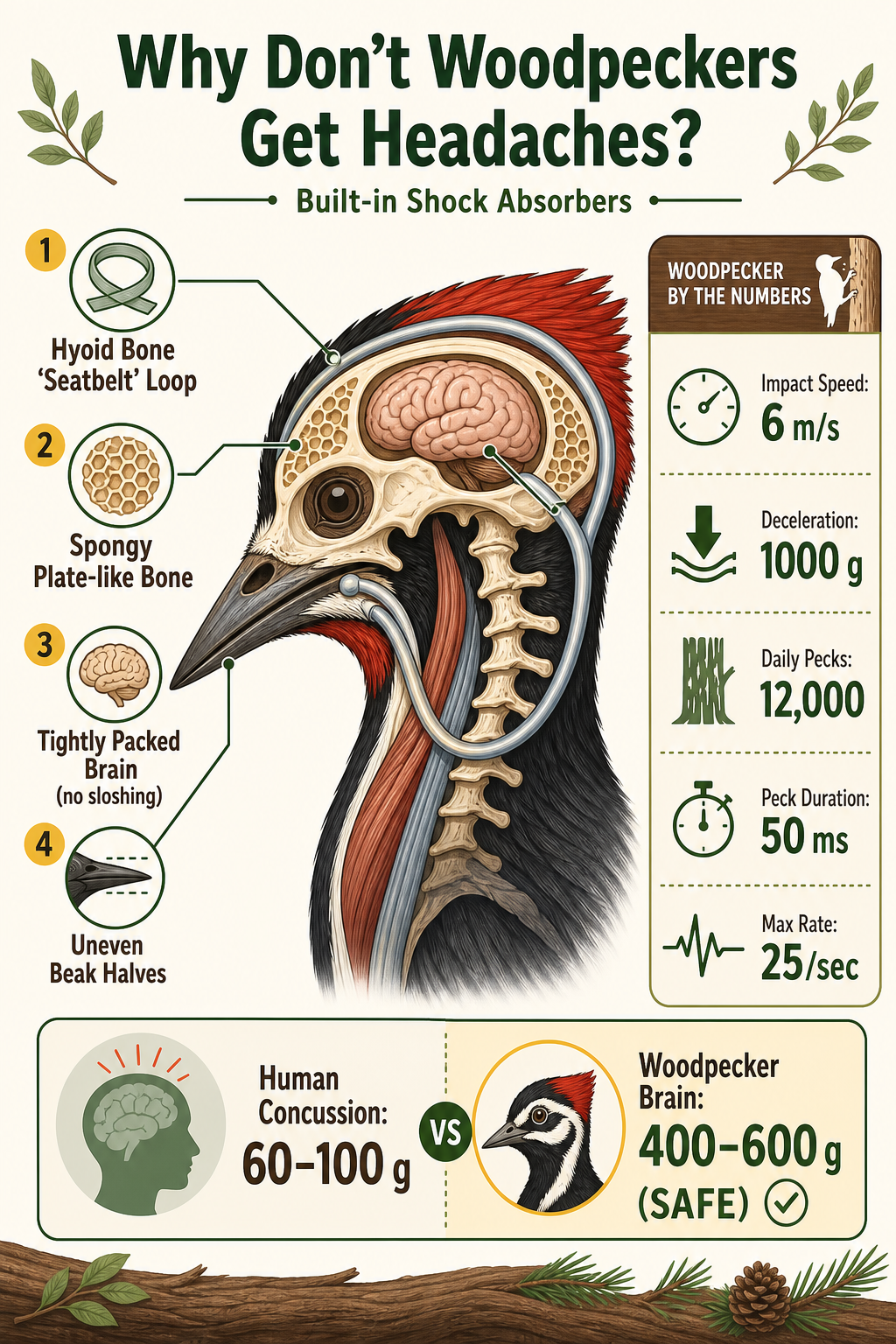
Woodpeckers dodge brain injury not with shock absorbers but by being built tiny and tough — their skulls manage forces no human could survive. A woodpecker’s head moves at 6 meters per second (20 feet per second), slamming to a stop with a deceleration of more than 1,000 times gravity. Each impact reaches a staggering 1,200 to 1,400 g’s—about fourteen times the force that would leave a human concussed. They drum up to 25 times per second in bursts lasting just 50 milliseconds each, piling up around 12,000 pecks in a single day. That’s a head-banging routine that makes a fighter jet’s maneuvers look gentle.
Nature's Masterpiece: The Classic Built-In Shock Absorbers
The woodpecker's skull doesn't just bash into trees — it's a finely tuned system of shock absorbers that rivals any human-made helmet. For decades, scientists have marveled at how these birds endure impacts that would knock us unconscious, and they've pinpointed a suite of physical features that act like built-in crumple zones and seatbelts.
The most famous piece of this puzzle is the hyoid bone, which wraps around the entire skull like a safety belt. Starting inside the upper beak, this delicate bone splits between the eyes, runs through the nostrils, and then arcs around the back of the head, passing over the top before reconnecting near the forehead and attaching to the tongue. When a woodpecker strikes, muscles around this loop contract, tensioning the bone and bracing the cranium against the spine. This prevents the brain from sloshing forward dangerously, diverting vibrational energy away from the skull. In essence, it's a biological seatbelt that activates on impact.
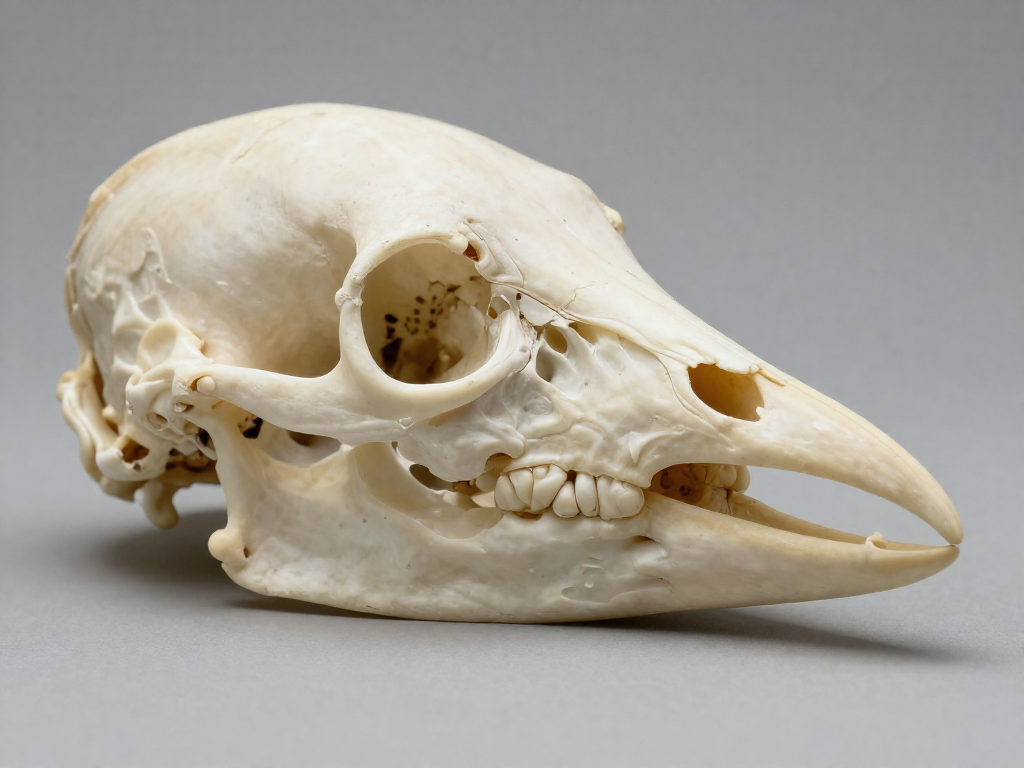
That's not the only trick. The skull's internal architecture is equally ingenious. At the forehead and the back of the head, the bone is spongy and plate-like, packed with porous, layered spaces that scatter incoming forces in many directions. Instead of a direct hit traveling straight to the brain, the energy dissipates through this cancellous maze. AskNature notes that these compressible sections can reduce the stress force between the beak tip and the brain by a factor of two to eight — a remarkable drop for a bird that hammers at speeds up to 20 times per second.
Then there's the beak itself. The upper and lower halves aren't perfectly matched; they're slightly uneven. This asymmetry means that when the beak tip hits wood, the shock doesn't transmit equally. The force travels less efficiently, lowering the load that actually reaches the brain. It's a subtle but crucial detail that computer simulations have confirmed as a major protective factor.
Even the woodpecker's brain shape and packaging play a role. Unlike humans, woodpeckers have almost no sub-dural space — the narrow gap between brain and skull that allows bruising in contact sports. Their brains fit snugly, with little room to bump around. And the brain is longer from top to bottom than front to back, meaning the force of each peck spreads over a larger surface area instead of concentrating at a single point. Together, these adaptations — a seatbelt-like hyoid, spongy crushing zones, an uneven beak, and a tightly-wrapped brain — form a classic picture of nature's impact-resistant design. Computer simulations by researchers, reported by BBC News, originally identified these three factors as working in concert to keep the bird's brain safe.
Shock Absorber or Stiff Hammer? The Science That Changed Everything
For decades, the accepted story was that woodpeckers pack a suite of biological shock absorbers—spongy skull bones, a looping hyoid bone, and a beak that somehow cushions the blow. But when scientists trained high-speed cameras on a pecking bird, the footage didn’t show any of that. In fact, it showed the exact opposite. The beak and head stop as one solid unit; there’s no spongy deceleration, no give. As detailed in a recent study, videos captured at 4,000 frames per second reveal the bill and skull decelerating in perfect sync—a clear sign that woodpeckers do not use shock absorption between the beak and the brain (Audubon).
So what’s really going on? The new model is elegant in its simplicity: the woodpecker’s skull acts like a stiff hammer, not a padded mallet. That rigidity delivers every bit of the 1,200–1,400 g impact straight into the tree, making each peck as efficient as possible. And yet, the brain comes out just fine. How? The secret isn’t absorption—it’s scale.
A woodpecker’s brain is tiny. For the same input acceleration, the strains and stresses inside the woodpecker’s head are about six times lower than what you’d measure in a human brain. That’s primarily because of the smaller head size, which fundamentally changes how forces ripple through the tissue. Add to that an impact that lasts less than a millisecond, and the brain simply doesn’t have time to slosh or deform dangerously. In fact, direct measurements in pecking birds find the actual forces on the brain cap out around 400–600 g’s—well below the concussion threshold. They’d need to peck twice as fast or hit a surface as hard as metal to risk injury.
Other adaptations still play supporting roles. The hyoid bone, often mistaken for a shock absorber, really acts more like a seat belt: its muscles contract during each strike, stabilizing the skull and spine and diverting vibration away from the brain. Spongy plate-like bones in the front of the skull scatter high-frequency waves, reducing the jolt that reaches deeper tissue. But the headline is that woodpeckers don’t cushion the blow—they embrace it, and their tiny, tightly-packed brains simply don’t care. It’s a complete flip from the old shock-absorber myth, and it’s a reminder that nature often solves problems in ways we least expect.
So What's the Real Secret? Piecing Together the Protective Puzzle
For a while, it looked like woodpeckers had built-in shock absorbers. Then high-speed video showed their beaks and heads stop at exactly the same rate—the skull acts like a stiff hammer to drive the beak, not a cushioned helmet. So what actually keeps the brain safe? A whole set of tiny, life-saving details working together.
Start with space and shape. A woodpecker’s brain is longer top-to-bottom than front-to-back, spreading impact force over more area. And there’s almost no subdural space between brain and skull, so it can’t slosh around the way a human brain does. Then comes timing. Between hammer blows there’s a dwell period of about 90 milliseconds—just enough for stresses to relax. If a bird doubled its pecking frequency, the strain on its brain would jump 100%, so that natural rhythm matters a lot.
Even with all that, they still stay inside a safety margin. In one study, the actual brain forces recorded were only 400–600 g’s—a fraction of what it would take to cause damage. To get hurt, a woodpecker would have to peck twice as fast or hit something as unyielding as a metal utility pole. And there’s a surprising final layer: woodpeckers accumulate far more tau protein in their brains than other birds. While excessive tau is bad news in humans, here it may be protective, not a sign of damage. As researchers at the Field Museum put it, this protein could be yet another built-in safeguard.
From Woodpeckers to Helmets: What We Can Learn
Engineers study woodpecker anatomy to design better sports helmets. Computer simulations identified three protective features: the hyoid bone acts like a safety belt after impact, uneven beak halves lower force reaching the brain, and plate-like, spongy bones distribute the shock (BBC). Mimicking these, designers are developing headgear with similar shock-dissipating layers and stabilizing structures, aiming to reduce concussions in humans.
Sources
- How woodpeckers avoid head injury - BBC News — bbc.com
- Why Do Woodpeckers Resist Head Impact Injury: A Biomechanical Investigation — journals.plos.org
- Biomechanical Analysis of Woodpecker Response During Pecking Using a Two-Dimensional Computational Model - PMC — pmc.ncbi.nlm.nih.gov
- What Woodpecker Brains Can Tell Us about Concussions - Field Museum — fieldmuseum.org
- New Study Shakes Up Long-held Belief on Woodpecker Hammering | Audubon — audubon.org
- Spongey Cranium Absorbs Impact — Biological Strategy — AskNature — asknature.org
- Hyoid Bone Secures Skull During Impact — Biological Strategy — AskNature — asknature.org
- Researches found that the hypothesis of the woodpeckers skull serve as a shock absorber is wrong, instead they use their cranial skeleton as a stiff hammer to enhance pecking performance. What save them from brain damage is the brain small size and braincase shape — reddit.com
- Instagram — instagram.com
- The tongue and hyoid bone of this pileated woodpecker wrap around its skull to help cushion the brain while it's pecking for food. The woodpecker's inner-skull contains compressible sponge-like bone, mostly concentrated in the forehead and the back of the skull, which functions as a shock absorber. — reddit.com
- Why Woodpeckers Don’t Get... - Cable Natural History Museum — facebook.com
See also
- How Do Eagles Spot Prey from Miles Away?
- The Secret of Gecko Feet
- Woodpecker Species: The Drummers of the Forest
Related articles
How Do Spiders Make Silk? The Chemistry Behind Nature's Strongest Fiber
How do spiders produce silk, and what makes it so strong?
Jul 28, 2026 · 10 min read
How Electric Eels Generate Shocks: A Deep Dive into Nature’s Living Batteries
How do electric eels produce electricity?
Jul 28, 2026 · 10 min read
How Do Whales Hold Their Breath for So Long? The Superpower of Deep Diving
How do whales hold their breath for extended periods?
Jul 20, 2026 · 6 min read