Why Do Flamingos Stand on One Leg?
Why do flamingos balance on a single leg?
On this page
The Quick Answer
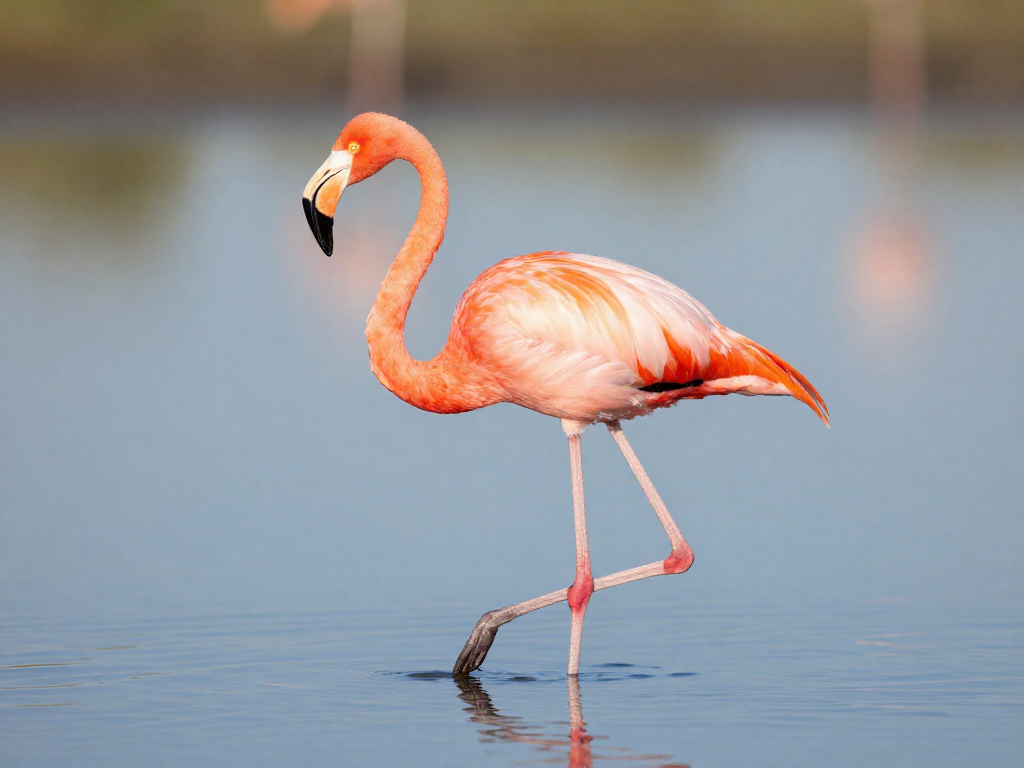
Here's the surprise: standing on one leg is actually easier for a flamingo than standing on two. Researchers found that a flamingo can balance on a single leg with almost no muscle effort, thanks to a passive "locking" mechanism in its joints that holds the pose in place even while the bird dozes.
So why do they do it? Two main reasons:
- Saving body heat. Tucking one leg up against the body reduces heat lost through their bare legs, especially in cool water and wind.
- Saving energy. Because the stance locks in place, their muscles barely have to work.
It's simply their comfy resting posture — not a sign of injury or discomfort.
Theory 1: Staying Warm
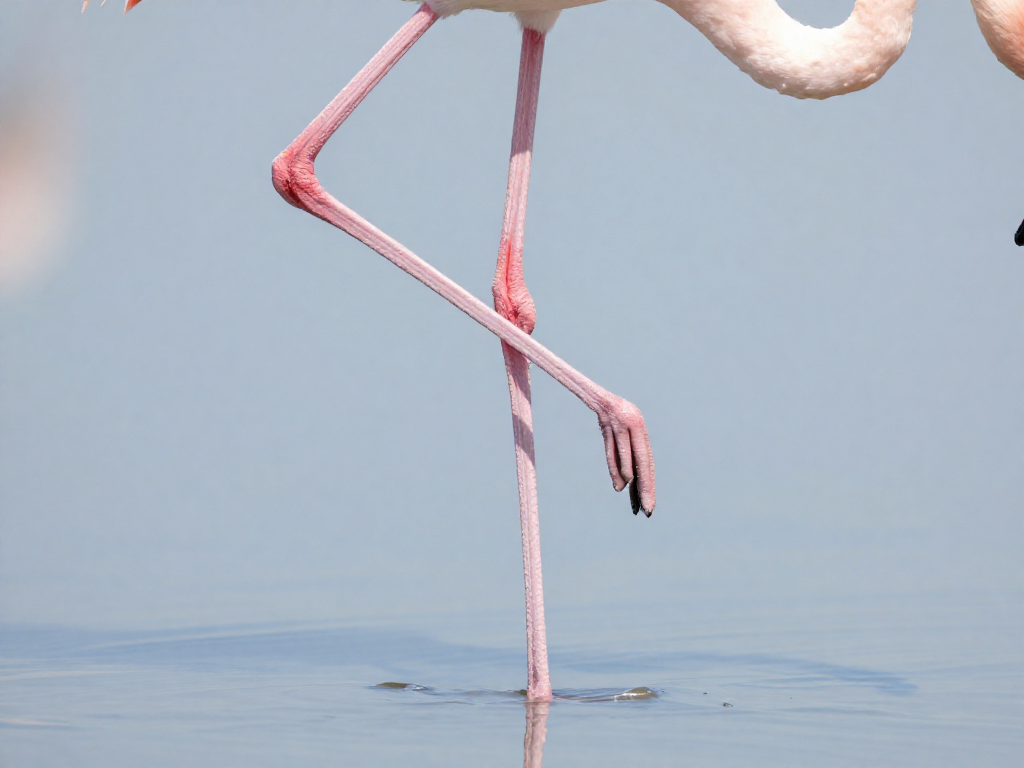
Here's a surprising twist: a flamingo standing on one leg may simply be trying not to freeze its feet off. Those long, skinny legs are bare skin with no feathers and very little fat, which makes them a fast track for body heat to escape—especially when a flamingo is wading in cool water.
By tucking one leg up into its warm belly feathers, a flamingo cuts the surface area exposed to the chilly water and air roughly in half. Less leg in the water means less heat lost, so the bird stays cozy while it rests.
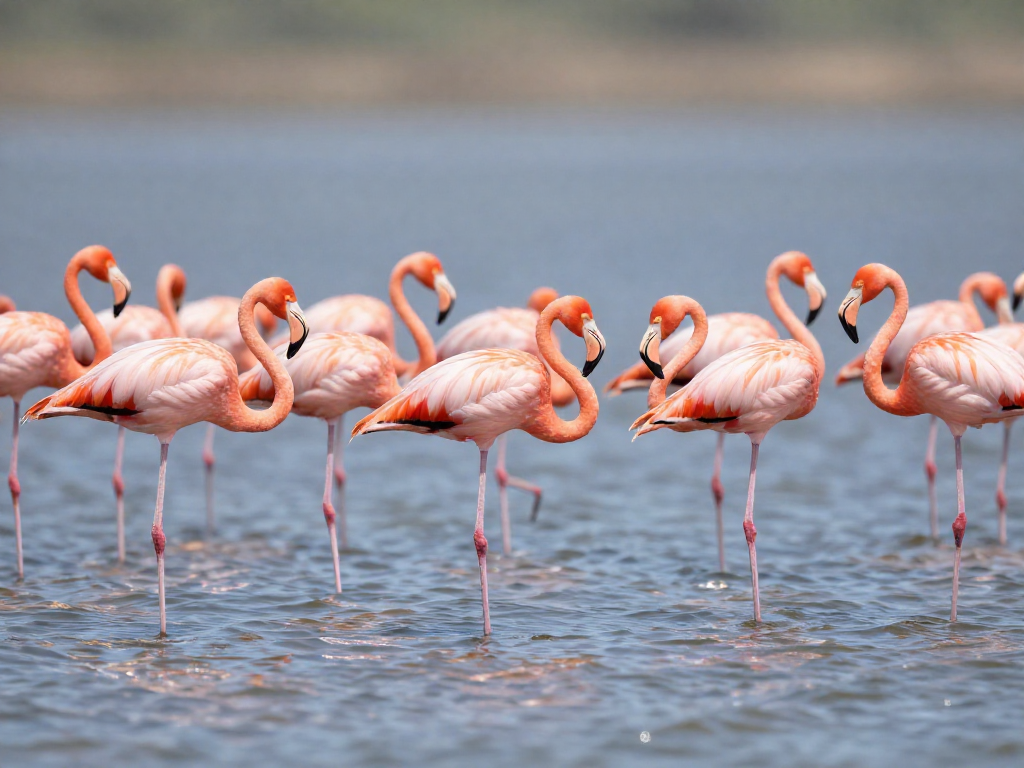
Behavior backs this up. Researchers have observed that flamingos stand on one leg more often when it's cold, and more often when they're standing in water than on dry land—exactly what you'd expect if the pose is about saving warmth. On hot days, you'll see more two-legged flamingos.
So the one-leg stance isn't a balancing trick or a stretch. For these pink waders, it may be a clever, built-in way to beat the chill.
Theory 2: Saving Energy (The Surprising One)
Here's the twist: a flamingo doesn't need any muscle effort to stand on one leg. In a study published in Biology Letters (2017), researchers Young-Hui Chang and Lena Ting found that even dead flamingos could balance steadily on a single leg — no living muscle activity required.
How? The bird's leg has a built-in "kickstand." When a flamingo pulls its body over one foot, the joint passively locks into place, much like a folding stepladder snapping into position. Gravity does the work, holding the leg rigid with no ongoing effort.
That leads to the counterintuitive part: standing on two legs actually costs more energy than standing on one. To stay upright on two legs, a flamingo has to actively engage muscles to keep balanced. On one locked leg, it can essentially switch those muscles off and coast.
The researchers also measured something neat: flamingos sway less when resting on one leg than on two. So the one-legged pose isn't a strain at all — it's the bird's version of putting its feet up.
Other Ideas Scientists Have Considered
Could flamingos just be giving one leg a break? It's a tempting idea, but researchers have found no strong evidence that standing on one leg actually rests tired muscles—and birds use very little muscle effort to balance in the first place.
An older theory suggested the pose helps with camouflage, making the bird harder for predators to spot. That one hasn't held up either; a bright pink bird isn't exactly hiding.
So why do thermoregulation (controlling body heat) and energy-saving lead the pack? Both are backed by careful observation and experiments—flamingos strike the pose more in cold water, and cadaver studies show one leg locks in place with almost no effort.
Do Flamingos Ever Fall Over?
Here's the wild part: a flamingo can fall fast asleep while still balanced on one leg—and stay upright the whole time. So no, they almost never topple over.
The secret is a passive "locking" joint (a built-in catch that holds the leg in place without using muscle). Once a flamingo settles its weight, the joint snaps into a stable position, so staying balanced takes almost no effort—even with its eyes closed.
They're not stuck that way, though. Flamingos switch legs every so often to stay comfortable and rest the muscles, then drift right back to their one-legged snooze.
The Takeaway
So that gangly one-legged pose? It's not a weird quirk—it's the flamingo's version of kicking back on the couch.
- It keeps them warm. Tucking one leg up against the body cuts heat loss in chilly water.
- It costs almost nothing. Their leg locks into place, so balancing on one leg takes barely any muscle or energy.
Next time you spot a flamingo on one leg, you'll know: that's a bird relaxing the smart way.
See also
- Why Are Flamingos Pink?
- How Do Birds Sleep Standing Up?
- Curious Kid Questions category page
- Why Do Birds Stand on One Leg?
Related articles

Why Do Cats Always Land on Their Feet? The Physics of Feline Righting
Discover the real reason cats land on their feet—it’s not the tail or magic. Learn the step-by-step righting reflex, the surprising physics behind the twist, and why higher falls can sometimes be safer.
Jul 28, 2026 · 4 min read

Why Do Fireflies Glow? And Other Summer Night Questions
Discover the simple science behind firefly bioluminescence, their coded flash language, and family-friendly tips for enjoying these magical insects without harm.
Jul 20, 2026 · 6 min read

Quick Reference: Common Animal Tracks to Spot in Your Backyard
What animal tracks might you find near your home, and how do you identify them?
Jul 20, 2026 · 4 min read