How Do Animals Talk to Each Other? Animal Communication Explained
How do animals communicate without language?
On this page
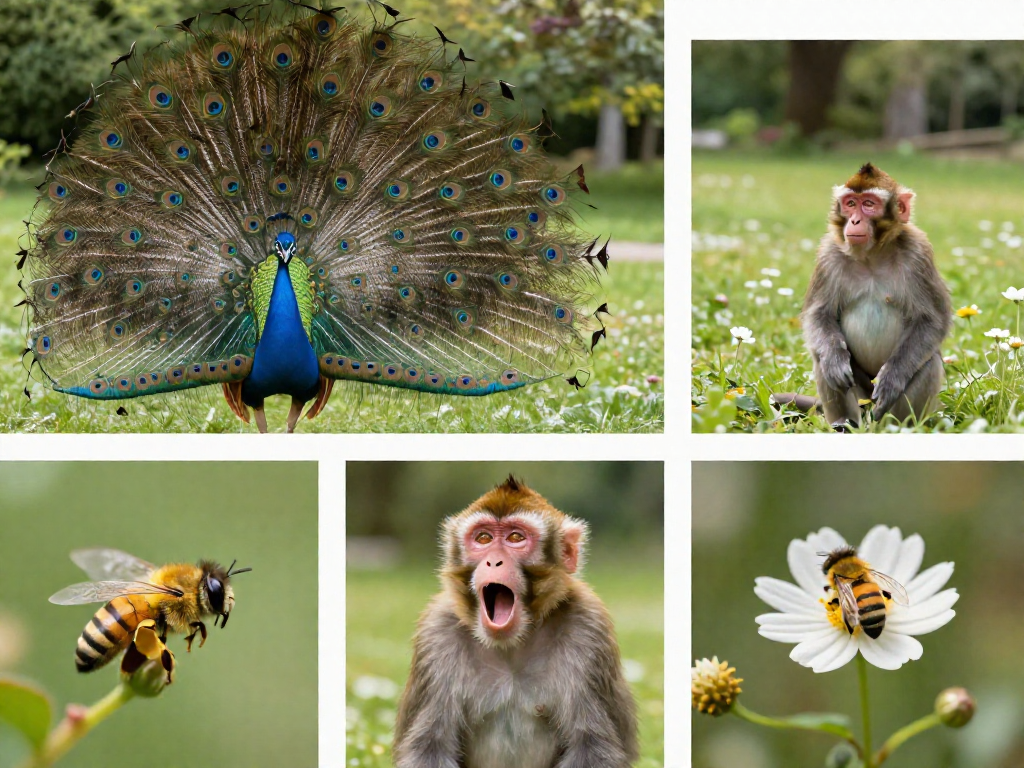
So, Do Animals Actually "Talk"?
Here's the surprising part: a single squirt of skunk spray, a firefly's flash, and a wolf's howl are all "sentences" in their own way. Animals are communicating around you constantly — you're just not tuned to their channels.
Quick answer: Yes, animals communicate all the time. But communicating isn't the same as having language, and that difference is the key to this whole article.
So what counts as communication? Scientists keep it simple: communication is sending a signal that changes another animal's behavior. A growl makes a rival back off. A peacock's tail convinces a mate to stay. If the signal lands and something changes, that's communication.
Language, on the other hand, is a special, supercharged version. Human language has grammar (rules for ordering words) and lets us build infinite new combinations — you can say a sentence today that no one has ever said before. Most animal communication is signaling: a set menu of meaningful cues rather than an endless, rule-based system. Powerful and precise, but not quite the open-ended toolkit we use.
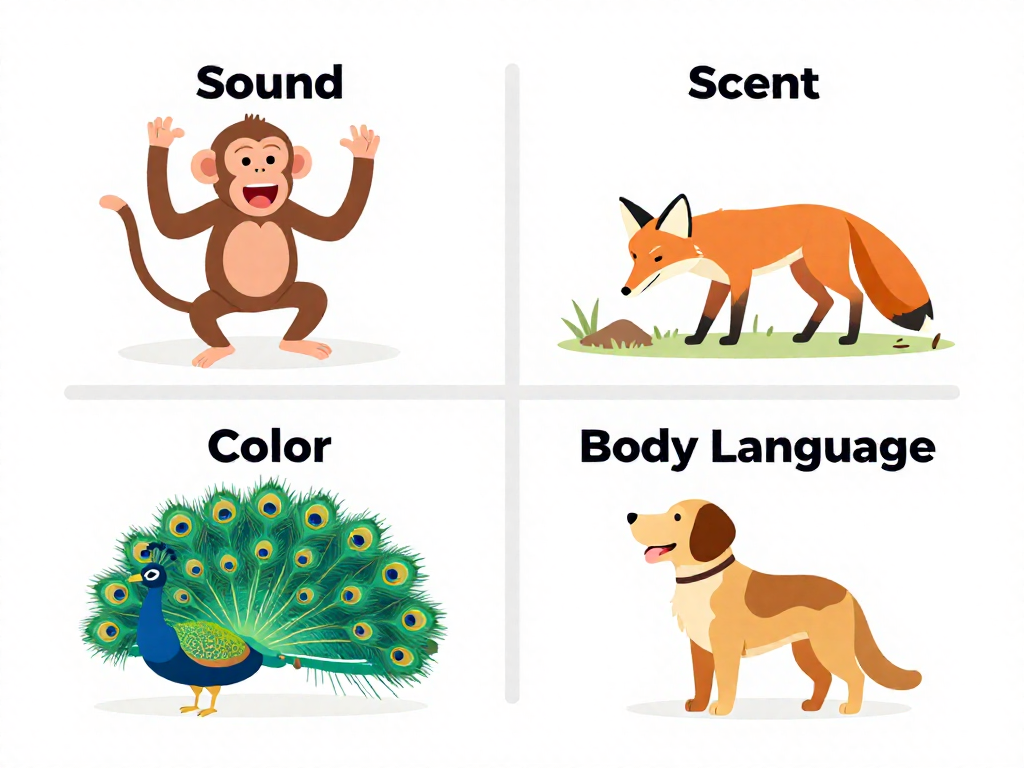
Animals send those signals across four main channels:
- Sound — chirps, howls, clicks, and songs
- Scent — chemical messages left on trees, trails, or in the air
- Color & visuals — bright warning colors, flashing lights, flashy displays
- Body language — posture, movement, and gestures
And why bother? Almost every animal message boils down to a handful of life's big jobs:
- Finding and impressing a mate
- Warning others about danger
- Claiming territory
- Pointing the way to food
- Bonding with family or a group
Keep those four channels and five reasons in mind — they're the map for everything ahead.
Talking With Sound: Calls, Songs, and Clicks
When a vervet monkey spots a leopard, it doesn't just scream "danger!" — it makes a specific call that means leopard, sending the troop racing up trees. Spot an eagle instead, and a different call sends everyone diving into bushes. Researchers studying these monkeys in Kenya found they use distinct alarm calls for different predators — basically spoken-word nouns for "leopard," "eagle," and "snake."
Sound is one of the animal kingdom's favorite ways to communicate, and it's easy to see why: it travels far, works in total darkness, and arrives instantly.
Songs for love and territory
Birdsong isn't random cheerfulness. Males sing mostly to attract mates and to warn rivals "this patch is taken." A single song can do both jobs at once.
Underwater, whales take it to an epic scale. Male humpback whales sing complex, repeating songs that can travel for miles through the ocean, and whales across a population gradually update their tune together — a slow-motion hit song that spreads across the sea.
Names, sort of

Dolphins go a step further. Each one develops a signature whistle (a unique sound that works a bit like a name), and dolphins will copy a friend's whistle to get its attention — one of the closest things to name-calling we've found in the wild.
Sounds we can't even hear
Some animal conversations happen completely outside our hearing range:
- Infrasound (sound too low for human ears): Elephants produce deep rumbles that can travel long distances, helping far-apart herds stay in touch.
- Ultrasound (sound too high for us): Bats fire rapid clicks and listen for the echoes to "see" insects in the dark, while mice squeak to each other in pitches we'll never notice.
Tiny rodents, surprisingly detailed reports
Prairie dogs may have one of the most descriptive alarm systems known. Studies by researcher Con Slobodchikoff suggest their calls can encode not just that a threat is near, but details about it — the type of predator, its approximate size, color, and even the direction it's moving. Imagine a lookout shouting "tall human in a yellow shirt, coming from the left" — in chirps.
The takeaway: Sound lets animals share urgent, specific information across distance and darkness, from a whale's mile-spanning song to a prairie dog's snap-fast threat report.
Talking With Scent: The Chemical Conversation
Imagine sending a text message that floats in the air for hours—and can still be "read" long after you've left the room. That's exactly how millions of animals chat every day, using smells instead of sounds. Welcome to the world of chemical communication, the most alien language on Earth (at least to our weak human noses).
The stars of this conversation are pheromones (chemical signals released by an animal to influence others of its species). These invisible messages handle some of life's biggest announcements: I'm ready to mate, Danger—run!, and Follow me, food is this way.
Ants: Voting With Smell
Ants are masters of the scent trail. When a forager finds food, it lays down a chemical path on the way home. Other ants follow it and add their own scent, making the trail stronger. The best routes get the most reinforcement, while shortcuts to nothing fade away. In effect, the colony "votes" with smell—no leader required. Some species follow these trails so faithfully they can be tricked into walking in an endless loop, a rare glitch in an otherwise brilliant system.
Leaving Your Mark
Plenty of animals use scent to say this spot is mine. Dogs do it on every walk. Big cats like tigers spray scent and rake trees, and white rhinos build communal dung piles—essentially a neighborhood bulletin board where each visitor reads who's been by and leaves an update. A single rhino "midden" can be visited by dozens of individuals, each sniffing out the local news.
The genius of scent is its staying power. A sound vanishes the instant it's made, but a chemical mark keeps broadcasting even after the sender has wandered miles away. It's a message with a built-in timer.
Tasting the Air
So how do animals read all these signals? Many use a special structure called the Jacobson's organ (a scent-detecting patch in the roof of the mouth, also called the vomeronasal organ). When a snake flicks its forked tongue, it's collecting scent particles and delivering them straight to this organ—literally tasting the air to track prey or a mate. Cats do something similar with that funny open-mouthed grimace called the flehmen response.
It's a whole conversation happening right under our noses—we just can't smell it.
Talking With Color and Light
Some animals can flip their entire body to a different color in under a second — cuttlefish do it constantly, like a living mood ring. Color and light are one of nature's loudest "voices," and animals use them to flirt, warn, and even send coded messages.
"Don't eat me" in neon. Bright colors often double as a billboard. The golden poison dart frog's vivid skin warns predators it's loaded with toxins, and monarch butterflies flash orange and black to advertise the milkweed poisons stored in their bodies. This is called aposematism (warning coloration), and it works because predators learn to link the color with a bad meal.
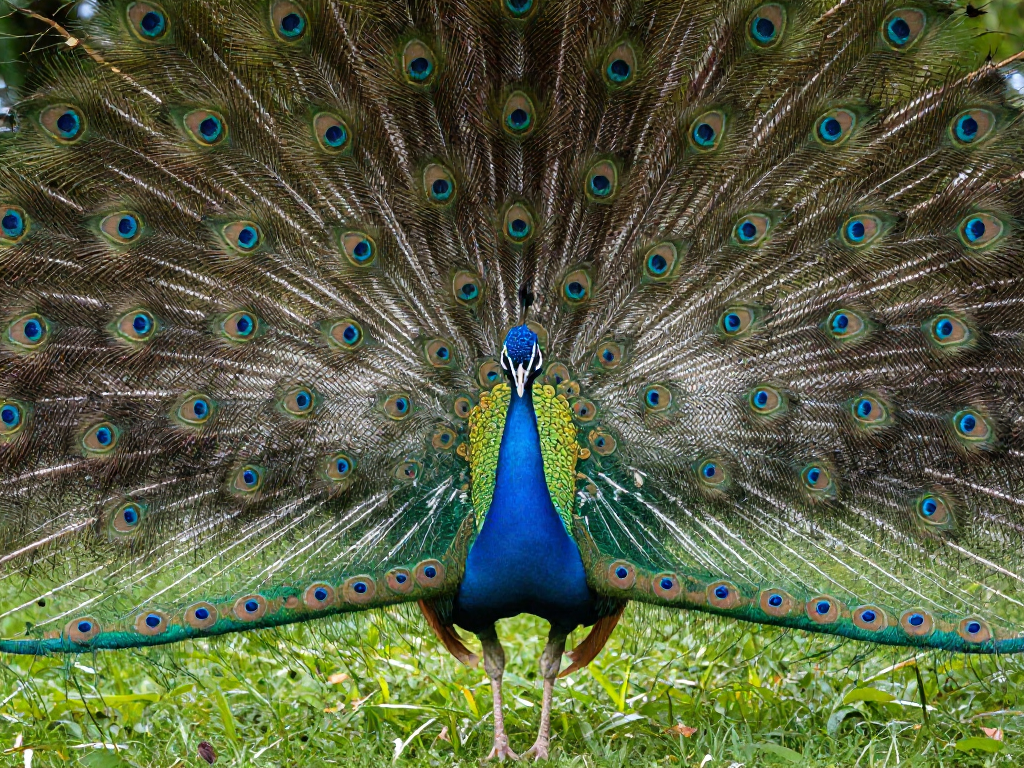
Showing off to find a mate. Other animals use color to impress. A male peacock fans out a shimmering tail of "eyespots" — the bigger and brighter the display, the more attention he draws. Male mandrills (the world's largest monkeys) sport blue and red faces that get more vivid as they rise in rank, signaling strength to rivals and mates alike. Cuttlefish take it further, rippling waves of color across their skin to court a partner while staying drab on the side facing a competitor.
Flashing in code. On summer nights, fireflies turn light itself into language. Each species blinks in its own rhythm and timing, so males and females can find the right match in the dark. Some species even mimic another's flash pattern to lure in prey — a glowing trick rather than a love letter.
Mood you can see. Color isn't always fixed. Many animals shift their hue with mood or readiness to mate, brightening when excited or fading when stressed, giving onlookers real-time updates.
The catch: it needs light. Visual signals have a big limitation — they only work when there's enough light and a clear line of sight. In murky water, dense forests, or total darkness, color goes silent, which is exactly why so many animals also rely on sound and scent to get the message across.
Talking With Body Language and Touch
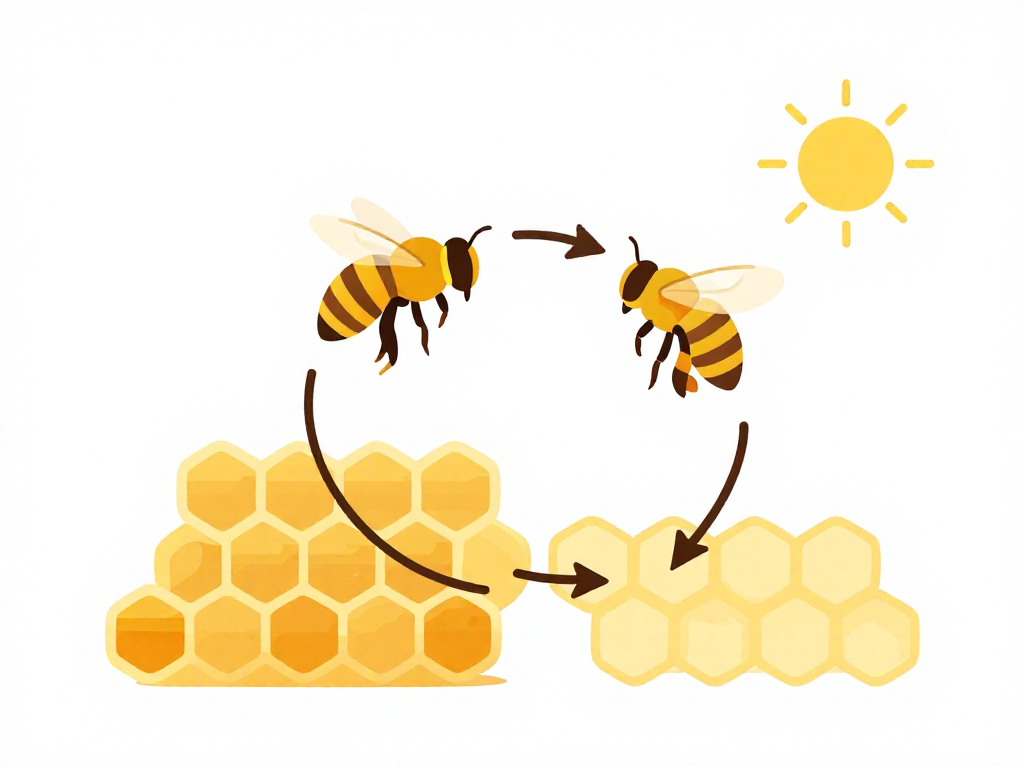
A honeybee can give her hive-mates turn-by-turn directions to a flower patch hundreds of yards away—without making a sound. She does it by dancing. This "waggle dance," decoded by Nobel Prize–winning scientist Karl von Frisch, uses the angle and duration of a figure-eight wiggle to point fellow bees toward food relative to the sun. It's one of the most precise non-verbal messages in the animal kingdom.
Most body-language signals are easier to read. Watch a dog and you're watching a whole conversation: a high, stiff tail can mean alertness, a low wag can mean uncertainty, and flattened ears often signal fear. The classic "play bow"—front legs down, rear end up—is a friendly invitation that says what comes next is just a game, not a real fight.
Messages You Can Feel
Some animals "talk" through vibration—signals that travel through the ground, plants, or webs instead of the air.
- Elephants pick up low-frequency rumbles through their feet, and research from Stanford biologist Caitlin O'Connell-Rodwell suggests they can detect these ground vibrations from miles away.
- Spiders read the tremors in their webs to tell a trapped meal from an approaching mate.
- Treehoppers (tiny plant-hopping insects) buzz messages through stems—a hidden chatter we can only hear with special equipment.
Touch That Builds Bonds
Touch is communication too, and often it's about trust. Primates like chimpanzees spend hours grooming one another, picking through fur in a ritual that strengthens friendships as much as it removes dirt. Horses do their own version, standing nose-to-tail and nibbling each other's withers—a behavior that has been shown to lower a partner's heart rate.
Honest Signals and Bluffs
Not every signal is the truth. When a pufferfish balloons up or a cat arches its back with fur on end, it's trying to look bigger and tougher than it really is—a bluff meant to scare off a threat. Scientists call the trustworthy signals "honest" because they're hard to fake (a genuinely large animal really is large), while bluffs gamble that the other animal won't call them on it. Reading the difference can be the difference between dinner and disaster.
Can Animals Combine Signals (Like We Do)?
Here's the surprising part: a single animal "message" is often several messages stacked at once. A peacock spider, for example, flashes a rainbow flap while drumming his abdomen and waving his legs in a tiny dance. Scientists call this multimodal communication (sending signals through more than one channel at the same time), and it shows up everywhere — color plus sound plus posture, all bundled into one display.
Some signals are even more impressive because they seem to stand for specific things. Vervet monkeys give different alarm calls for leopards, eagles, and snakes — and other monkeys react correctly even without seeing the predator, scanning the trees for an eagle or the ground for a snake. Researchers call signals like these referential (they appear to "refer" to something in the world), a behavior also studied in prairie dogs and chickens.
So is this language? That's where the debate heats up. Great apes have learned hundreds of symbols or signs, and dolphins respond to ordered sequences of gestures — hints that some animals grasp meaning and simple structure. But most scientists stop short of calling it true language, which uses grammar to endlessly recombine words into brand-new sentences ("the leopard that chased the eagle yesterday").
The consensus today: animal communication is astonishingly rich, flexible, and sometimes meaning-packed — but it's powerful signaling, not human-style language. And honestly, a dancing, drumming, rainbow-flashing spider is plenty amazing on its own.
Quick Takeaways: How Animals Communicate
Animals don't use words, but they "talk" constantly across four main channels—and each one is its own kind of genius.
- Sound – Calls, songs, and clicks. Sperm whales fire off click patterns called codas that travel for miles underwater.
- Scent – The chemical conversation. Ants lay scent trails so precise that a whole colony can follow one to food.
- Color & light – Visual signals. A male peacock's shimmering tail tells females he's healthy and strong.
- Body language & touch – Movement and contact. Honeybees do a "waggle dance" that maps the direction and distance to flowers.
The big takeaway: this is signaling, not human language—no grammar, no sentences. But it's still astonishingly sophisticated, letting animals warn, woo, navigate, and cooperate every single day.
See also
- Why do dogs wag their tails?
- How do bees make honey?
- Why are poison dart frogs so colorful?
- How do whales sing?
- Why do animals have territories?
Related articles

When Your Dog Won't Stop Licking: A Troubleshooting Guide for Common Causes
Why does my dog keep licking everything, and how can I address it?
Jul 28, 2026 · 7 min read
Why Do Birds Sing at Dawn? The Science of the Dawn Chorus
Why do birds sing so loudly early in the morning?
Jul 28, 2026 · 6 min read
Monogamy vs. Polygamy in the Animal Kingdom: A Comparative Guide
How do monogamous and polygamous mating systems compare, and which animals use which?
Jul 20, 2026 · 9 min read