Why Do Animals Play? The Science of Fun in the Wild
Why do animals engage in play behavior?
On this page
What Counts as "Play" in the Animal World?
A raven slides down a snowy roof, climbs back up, and does it again — for no reward at all. That's not survival. That's play, and scientists have a surprisingly strict checklist for spotting it.
The quick answer: Play is behavior that's done for its own sake. To separate it from feeding, fighting, or mating, researchers like animal behavior expert Gordon Burghardt use five criteria. A behavior is play when it's:
- Voluntary — the animal chooses to do it, with no obvious payoff
- Repeated — it happens over and over, often the same way
- Not fully serious — it's an incomplete or "watered-down" version of a real behavior
- Exaggerated or borrowed — movements are oversized, clumsy, or pulled from another context (like hunting moves used on a stick)
- Done in safety — it shows up when the animal is relaxed, healthy, and well-fed, not stressed or hungry
Scientists also sort play into three main types:
- Locomotor play: running, leaping, twirling, or that snowy raven sled run
- Object play: batting, carrying, or tossing toys, sticks, or stones
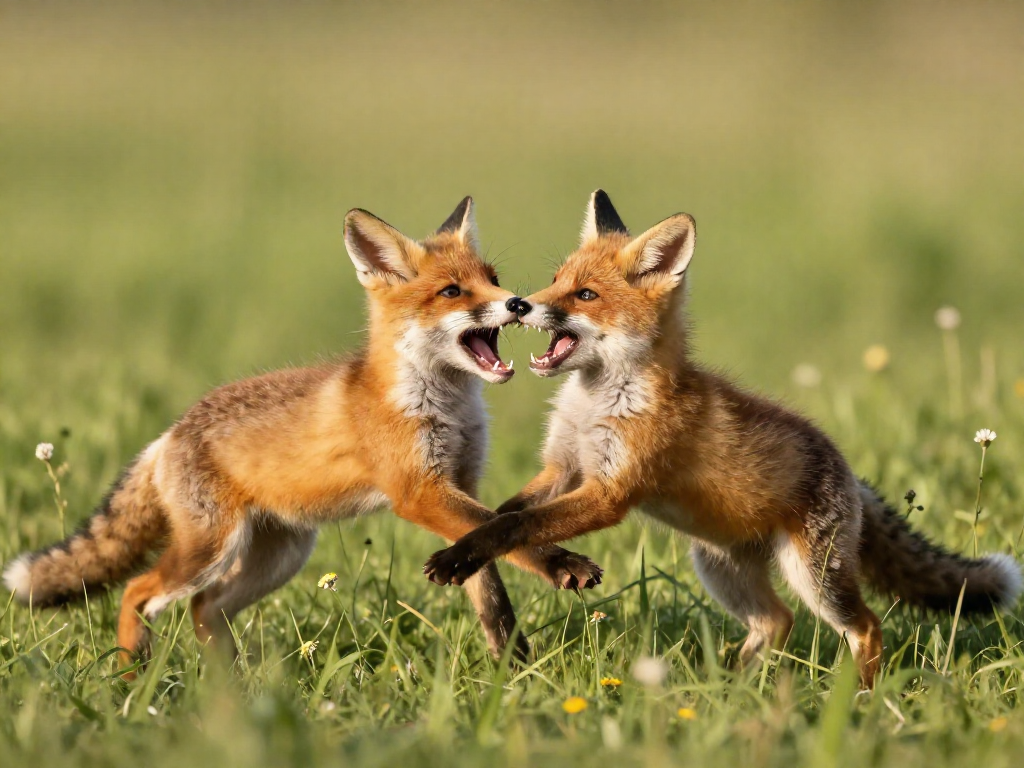
- Social play: chasing and play-fighting with a partner
So how do you tell a play-fight from a real one? The clues are clear: nobody gets hurt, the animals swap roles (the "winner" lets itself be pinned next time), and many species flash a signal that means "this is just for fun." In dogs, that's the famous play bow — front legs down, rump in the air — a universal invitation to romp.
Which Animals Actually Play?
Here's a surprise: a crocodile will give a piggyback ride, and a wasp will roll a tiny ball just for the fun of it. Play isn't a quirk reserved for puppies and kittens — scientists have documented it across a startling range of the animal kingdom.
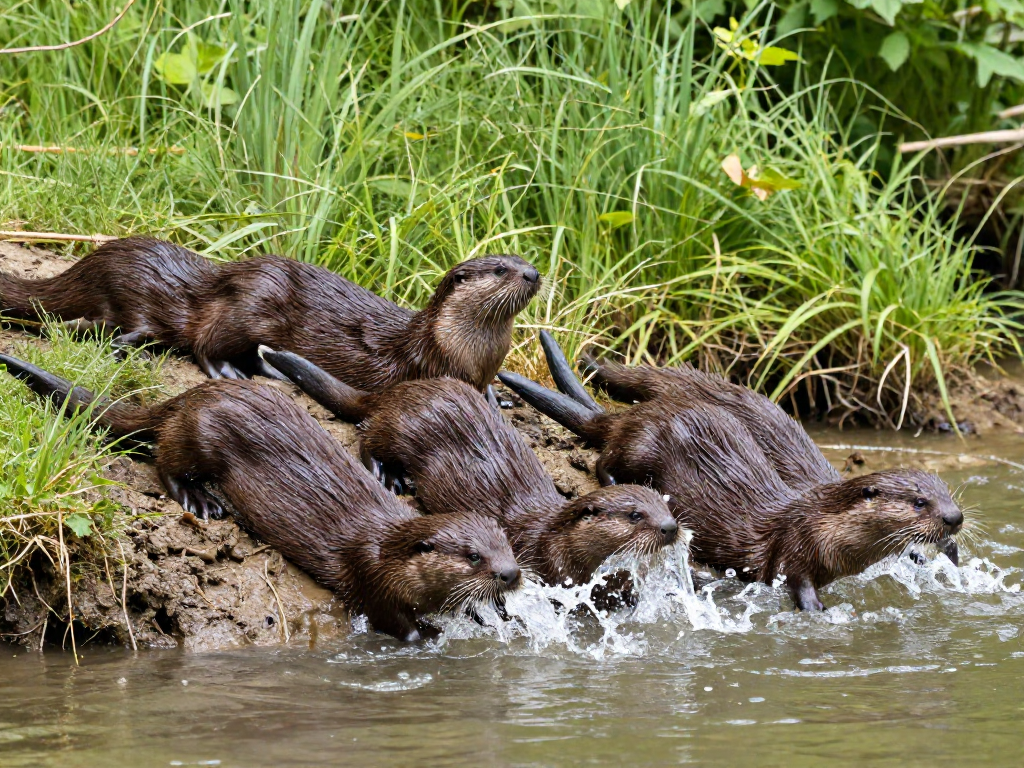
The classic players are mammals, and you've probably watched them in action. Puppies wrestle, kittens pounce on string, otters slide down muddy riverbanks again and again, and young primates and big cats chase and tackle for hours.
The unexpected players are the real jaw-droppers. Octopuses have been seen repeatedly pushing floating bottles into a tank's water current, like a kid bouncing a ball off a wall. Captive crocodiles play with objects and even ride on each other's backs. And in a 2017 study, bumblebees rolled small wooden balls with no reward at all — apparently just because it felt good.
Birds play too. Ravens have been filmed sliding down snowbanks on their backs, then climbing up to do it again. Parrots invent games with toys and tease their flockmates.
There's a pattern hiding in all this. Play shows up most often in big-brained, long-lived species with a long childhood — animals that have both the spare energy and the time to learn through messing around. That single thread, from otters to octopuses, hints at why fun evolved in the first place.
The Real Reasons Animals Play
When a young fox pounces on a leaf or a pair of ravens slide down a snowy roof again and again, they aren't just goofing off—they're doing serious developmental work disguised as fun. Scientists who study play have found that this "useless" behavior actually serves several deep purposes, all tied to surviving and thriving.
Practice for survival. A lot of play is real-life skills rehearsed in low-stakes mode. Kittens stalk and pounce, fawns bolt and zigzag, and young wolves wrestle—rehearsing the hunting, fleeing, and fighting they'll need as adults. The classic theory holds that play lets animals make mistakes when the cost is a tumble in the grass, not a missed meal or a real injury.
Building the brain. Play tends to peak during a "sensitive period"—a developmental window early in life when the brain is rapidly wiring itself. Research on rats shows that those allowed to play develop richer connections in the prefrontal cortex, the brain region tied to decision-making and self-control. In short, play helps build a more flexible, adaptable brain.
Social glue. Social play is how many animals learn the rules of their group: how hard is too hard, when to back off, and how to read a partner's signals. Dogs and many other mammals use a "play bow" (front legs down, rump up) to say this is just a game. Many species also self-handicap—a big, strong animal pulling its punches so a smaller playmate stays in the game—a behavior that looks a lot like fairness.
Fitness and coordination. All that chasing, leaping, and tumbling is a workout. Play builds muscle, stamina, balance, and split-second coordination, keeping the body tuned for the demands of real life.
Stress relief and plain fun. Play also seems to help animals cope. Young rats laugh in ultrasonic chirps when tickled, and many animals play more when they feel safe and well-fed. Researchers are increasingly comfortable saying the obvious: animals appear to play, at least partly, because it simply feels good.
The takeaway? Play isn't one thing with one purpose. It's a multitasking behavior—training body and brain, strengthening bonds, and lifting mood—which is exactly why it shows up across so much of the animal kingdom.
What Play Teaches Young Animals
Here's a surprise: when a big puppy wrestles a tiny one, it often loses on purpose. Scientists call this self-handicapping (when a stronger animal holds back so a weaker playmate can keep up), and it shows up across species—from dogs to wolves to dolphins. That gentle restraint may be one of an animal's first lessons in fairness: play only continues if both partners keep it fun.
Play also teaches young animals how to lose and bounce back. A coyote pup that gets pinned, shakes it off, and dives back in is rehearsing resilience. In fact, researchers have noted that animals frequently use "play signals"—like the dog "play bow"—to reset the game after a rough moment, the equivalent of saying "I'm still just playing."
Best of all, play lets the young test their limits when the stakes are low. A young mountain goat practicing dizzying leaps on a safe slope, or a kitten stalking a leaf, is sharpening skills it will later need for real—before a misstep means a missed meal or a real predator.
Does it actually pay off? Evidence suggests it does. A long-term study of wild brown bears found that cubs who played more were more likely to survive to independence, regardless of how much food or how many siblings they had. In social species like meerkats and primates, play also helps youngsters learn the group's "rules," smoothing their path to adult social success.
In short, play isn't wasted time—it's how young animals quietly build the body and brain skills that help them thrive.
Do Animals Play Just for Fun?
Tickle a rat and it will giggle. Neuroscientist Jaak Panksepp discovered that rats make rapid, ultrasonic "laughter" chirps (around 50 kHz, far too high for us to hear) when tickled—and they'll chase your hand for more. Great apes make their own breathy, panting laughs during rough-and-tumble play. So yes, there's real evidence that animals feel something like joy.
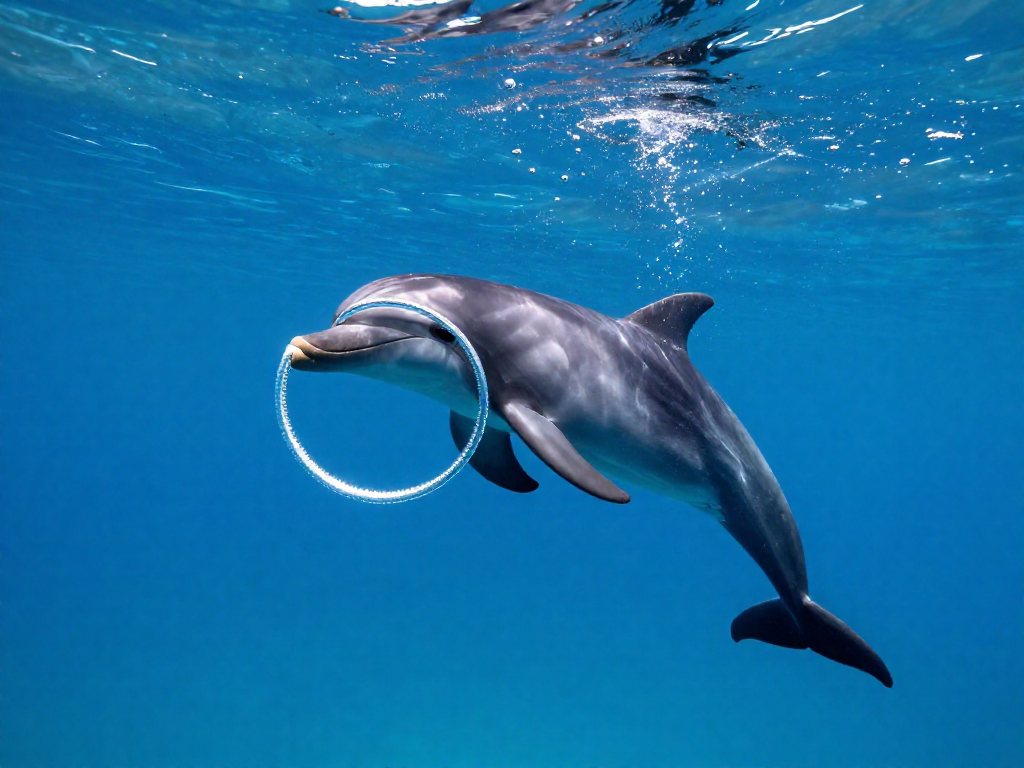
Some play has no obvious survival payoff at all. Wild dolphins, for example, blow swirling underwater bubble rings, then nudge and bite at them just to watch them wobble and pop—pure entertainment, with no food or mate in sight.
What does this say about animal consciousness (inner feelings and awareness)? Honestly, scientists can't read an animal's mind, so we can't prove a dolphin feels delight the way you do. But behaviors like these strongly suggest many animals experience positive emotions, not just survival instincts. The careful takeaway: play hints that the inner lives of animals may be richer—and more familiar—than we once assumed.
The Takeaway: Play Is Serious Business
Here's the twist: that goofy puppy zoomies session is actually one of nature's oldest training programs. Far from a waste of energy, play is how countless animals practice the skills that keep them alive.
Quick recap of why animals play:
- Practice for survival — young predators rehearse hunting, chasing, and pouncing in low-stakes "games."
- Building bodies and brains — play strengthens muscles, coordination, and neural connections.
- Social glue — wrestling and chasing teach animals how to read each other and get along.
- Sometimes, just joy — researchers find some play seems to happen simply because it feels good.
The deeper scientists look, the blurrier the line between us and other species becomes. Rats giggle when tickled; otters slide for the fun of it. Play reminds us that fun isn't uniquely human—it's woven into the wild itself.
Know someone who'd love this? Share the wonder.
See also
- Why Do Cats Knock Things Off Tables?
- How Smart Are Octopuses, Really?
- Why Do Dogs Tilt Their Heads?
- Do Animals Have Emotions? What Science Says
- Why Do Ravens Use Tools?
Related articles

When Your Dog Won't Stop Licking: A Troubleshooting Guide for Common Causes
Why does my dog keep licking everything, and how can I address it?
Jul 28, 2026 · 7 min read
Why Do Birds Sing at Dawn? The Science of the Dawn Chorus
Why do birds sing so loudly early in the morning?
Jul 28, 2026 · 6 min read
Monogamy vs. Polygamy in the Animal Kingdom: A Comparative Guide
How do monogamous and polygamous mating systems compare, and which animals use which?
Jul 20, 2026 · 9 min read