How Do Bats See in the Dark?
How do bats find their way and food in total darkness?
On this page
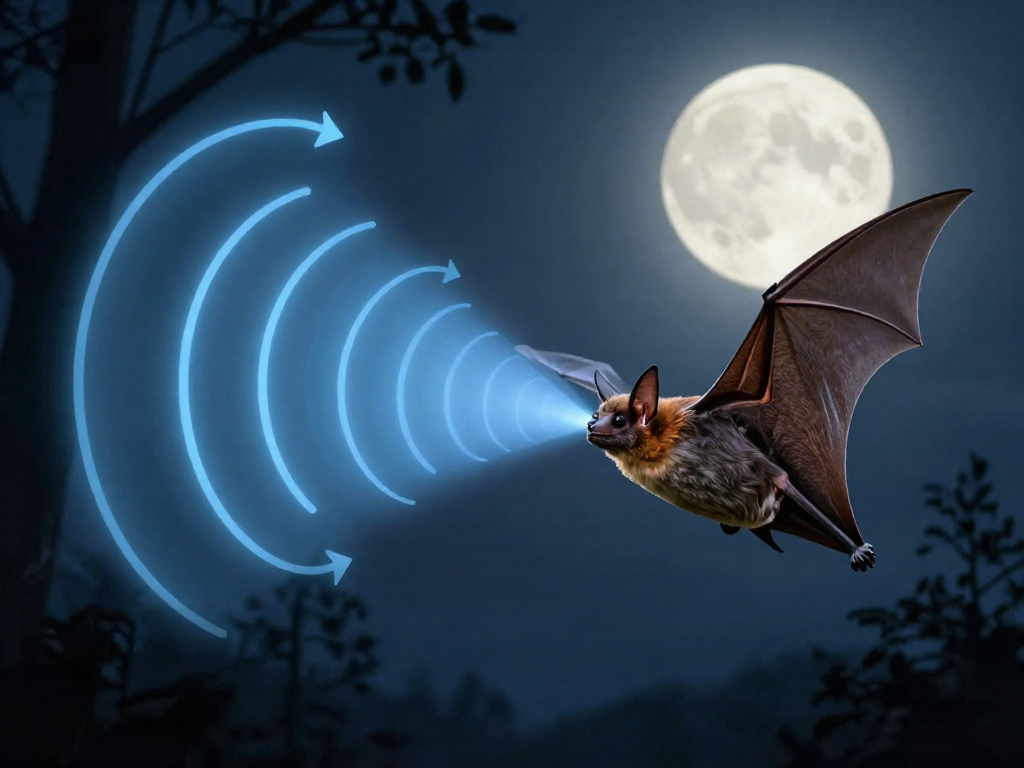
Quick Answer: Bats Use Sound to See
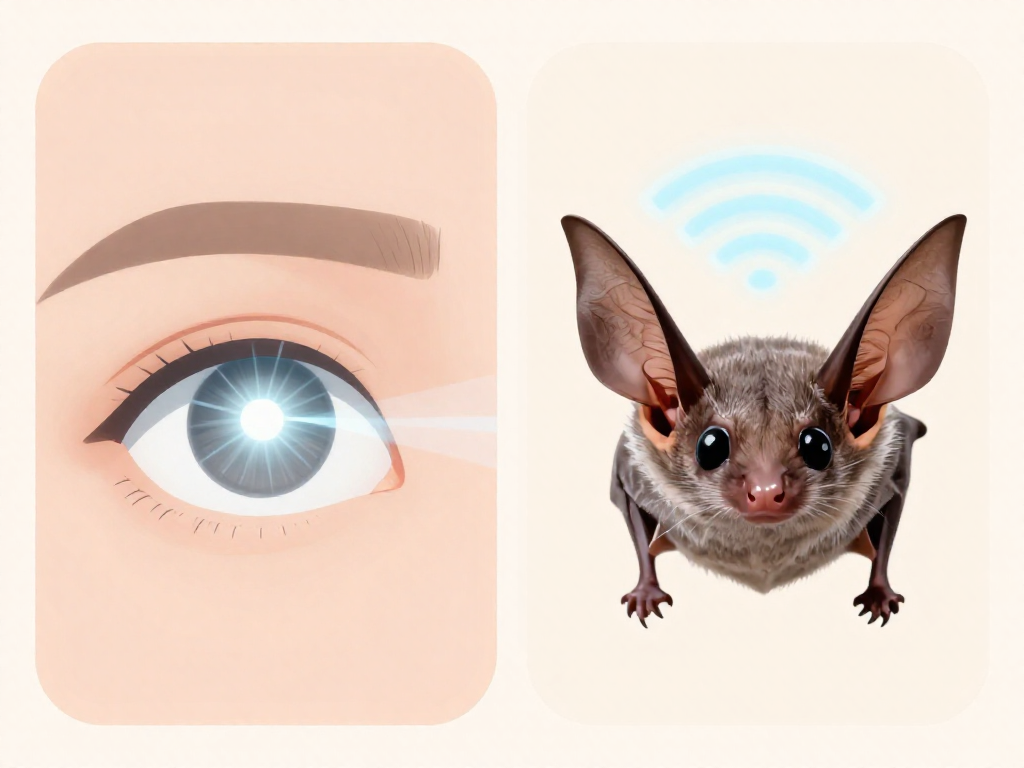
Here's the surprising truth: most bats don't really "see" in the dark at all — they listen their way through it. As they fly, bats let out rapid, high-pitched chirps (far too high for human ears to catch) and then listen for the echoes that bounce back off everything around them. This trick is called echolocation (using sound echoes to locate objects), and it works like a built-in sonar system. From the timing and direction of each returning echo, a bat's brain builds a detailed "sound picture" of its surroundings — close enough to dodge a thin branch or snatch a single mosquito in midair. That's how bats find their way and catch food in total darkness.
Are Bats Actually Blind?
Here's the twist that surprises almost everyone: not a single bat species is truly blind. The old saying "blind as a bat" is a myth — every one of the world's 1,400-plus bat species has working eyes, and many see just fine.
In fact, some bats see better than we do in dim light. Fruit bats, for example, navigate by sight alone, and certain species can even detect ultraviolet light that's invisible to humans.
So why all the fuss about sound? Because in pitch darkness — a cave at midnight, the inky air of a moonless night — eyes hit their limit. When there's no light to catch, sight simply can't help. That's when bats switch to a far more powerful tool: hearing. And that's where the real magic begins.
What Is Echolocation? (The Simple Version)
Here's a surprising thought: a bat can "see" a moth in pitch darkness using nothing but sound. That superpower is called echolocation (locating things by listening to echoes).
Imagine standing at the edge of a canyon and shouting "Hello!" A second later, your voice bounces back. That returning sound is an echo — and your ears just told you the canyon wall is far away. A bat does the same thing, except it shouts dozens of times per second and listens with astonishing precision.
Here's how a bat turns those echoes into a mental picture:
- It makes a sound. The bat sends out a quick call (often too high-pitched for humans to hear).
- The sound bounces back. When the call hits something — a tree, a wall, a tasty insect — part of it returns as an echo.
- Its brain times the trip. A fast-returning echo means the object is close; a slow one means it's farther away.
- It reads the details. The echo's strength and shape reveal an object's size, texture, and even whether it's moving.
String thousands of these echoes together, moment by moment, and the bat builds a detailed "sound map" of its surroundings. It's not magic — it's just incredibly fast hearing and a brain built to do the math in a fraction of a second.
How a Bat "Sees" a Picture With Sound
Here's the wild part: a bat can spot something as thin as a single human hair in total darkness — using nothing but sound. No nightlight required.
It starts with clicks. A hunting bat fires out a stream of high-pitched calls, sometimes 100 to 200 times per second when closing in on a meal. Each click races out, bounces off whatever it hits — a moth, a branch, a wall — and zips back as an echo.
Then comes the magic. The bat's brain measures tiny differences in those returning echoes: how long they take to come back, how loud they are, and which ear hears them first. From that flood of information, it builds a detailed "sound map" of the space around it, updating in real time as it flies.
Those oversized ears aren't just cute — they work like satellite dishes, scooping up the faintest echoes and funneling them in. Big, cupped, and finely tuned, they help the bat pinpoint a fluttering insect mid-flight.
The result is a clear mental picture, painted entirely with sound.
Catching Dinner in the Dark
Imagine snagging a flying insect in pitch blackness—using nothing but sound. That's an ordinary night for an insect-eating bat. As it cruises the dark, it sends out clicks and listens for the echoes bouncing off a fluttering moth, locking onto its target mid-flight.
Here's the cool part: as the bat closes in, it fires those clicks faster and faster, ramping up to 150–200 per second. Scientists call this rapid-fire burst a "feeding buzz" (a quick stream of clicks that helps the bat pinpoint prey in the final split-second before the catch).
But moths aren't helpless. Some species have evolved ears tuned to bat clicks, so when they "hear" a hunter coming, they fold their wings and dive, loop, or tumble to escape. It's a high-speed sound-versus-sound duel playing out above your backyard every night.
Fun Bat Facts to Surprise Your Friends
Here's the twist most people get wrong: not every bat is a sound wizard. Big fruit bats (also called flying foxes) mostly rely on their large eyes and sharp sense of smell to find ripe fruit — no echolocation needed.
A few more facts worth saving:
- You can't hear most of it. Many bat clicks are ultrasonic (too high-pitched for human ears), often above 20,000 Hz — the upper limit of what people can hear.
- Bats aren't the only ones. Dolphins and some toothed whales use echolocation too, sending out clicks that bounce off fish in murky water.
- Eyes still matter. Even echolocating bats can see; the "blind as a bat" saying is simply a myth.
Got a favorite? Share it and watch your friends do a double take.
See also
- How Do Dolphins Use Echolocation?
- Why Are Bats Awake at Night? (Nocturnal Animals Explained)
- Do Animals Have Better Senses Than Humans?
- What Do Bats Eat?
Related articles

Why Do Cats Always Land on Their Feet? The Physics of Feline Righting
Discover the real reason cats land on their feet—it’s not the tail or magic. Learn the step-by-step righting reflex, the surprising physics behind the twist, and why higher falls can sometimes be safer.
Jul 28, 2026 · 4 min read

Why Do Fireflies Glow? And Other Summer Night Questions
Discover the simple science behind firefly bioluminescence, their coded flash language, and family-friendly tips for enjoying these magical insects without harm.
Jul 20, 2026 · 6 min read

Quick Reference: Common Animal Tracks to Spot in Your Backyard
What animal tracks might you find near your home, and how do you identify them?
Jul 20, 2026 · 4 min read