Why Do Birds Migrate Thousands of Miles Every Year?
Why do birds migrate and how do they know where to go?
On this page
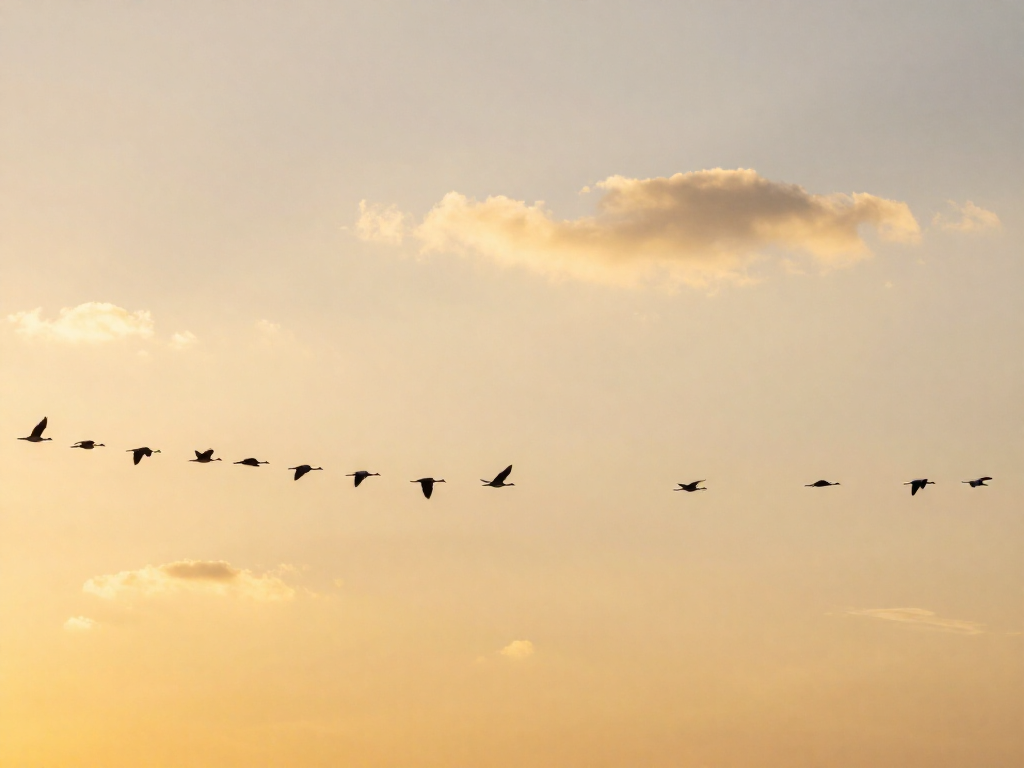
The Short Answer: Food, Weather, and Babies
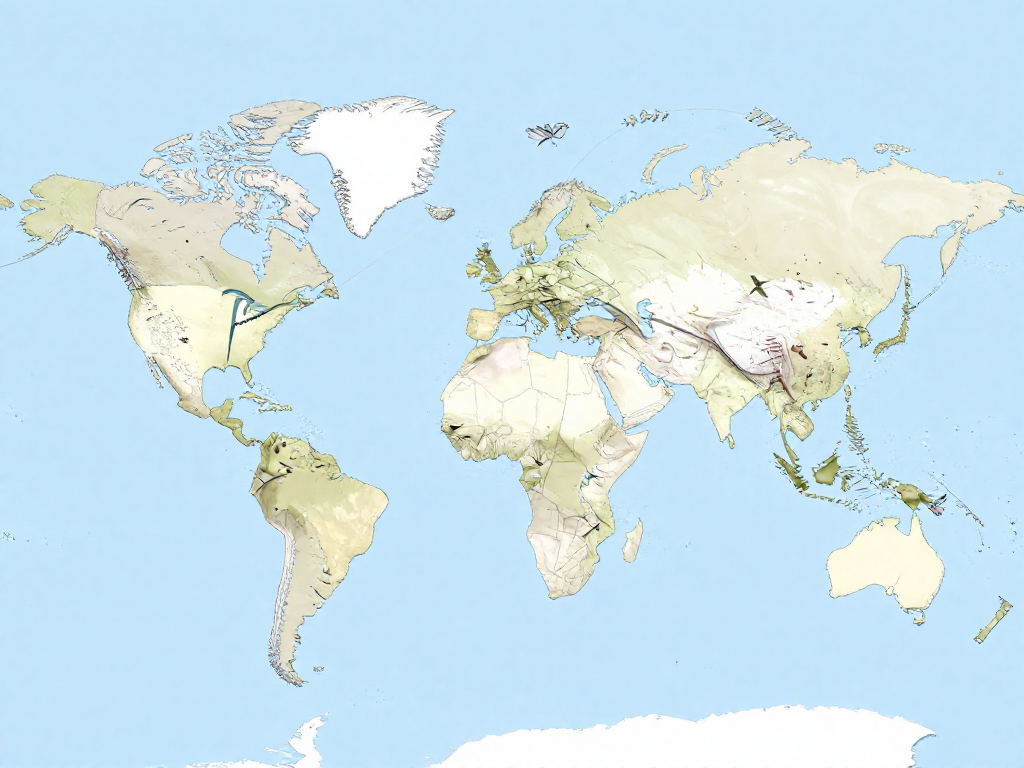
An Arctic tern racks up roughly 25,000 miles a year flying between the Arctic and Antarctica — far enough to lap the planet. Why would any animal sign up for a trip that exhausting? The answer comes down to three things: food, weather, and babies.
Food first. Most migrating birds aren't chasing warm weather for its own sake — they're chasing meals. Insects, nectar, and seeds boom in spring and crash in winter. When the buffet closes in one place, birds simply move to where it's still open.
Then weather. Surviving a freezing winter burns enormous energy, and a small bird can't always eat enough to keep its internal furnace running. Flying somewhere milder costs effort, but it can cost far less than toughing out months of cold and scarcity.
Finally, babies. Many birds travel to seasonal breeding grounds that offer real parenting perks: safer nesting spots, fewer predators, and long summer days. More daylight means more hours to hunt food for hungry chicks, which helps more young survive.
So migration is really a trade-off. The journey is risky — storms, exhaustion, and predators all take a toll. But for these species, the dangers of staying put are even greater. Over countless generations, the birds that made the trip raised more surviving young, and that survival math is exactly why the behavior endures today.
In the sections below, we'll dig into how birds pull off these epic journeys — including the astonishing ways they find their way.
What Actually Triggers a Bird to Take Off?
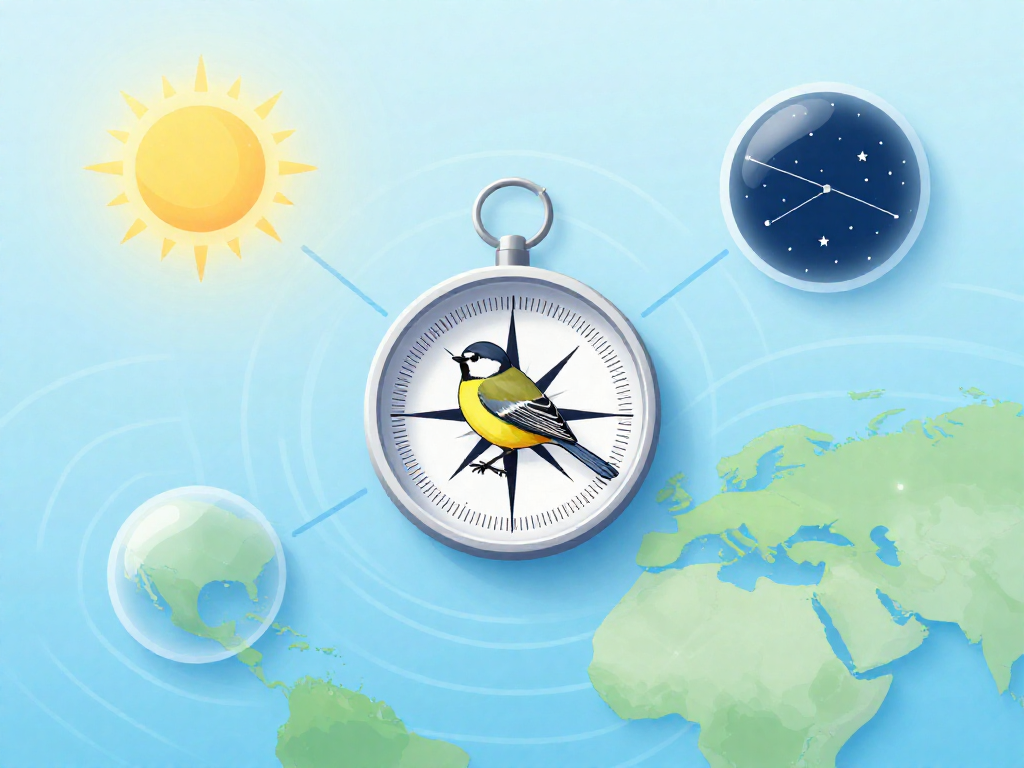
Here's the surprising part: most migrating birds aren't fleeing the cold at all. Many of them pack up and leave while it's still warm and food is plentiful — because their bodies are running on a calendar, not a thermometer.
The master cue is day length, also called photoperiod (the number of daylight hours). As days shorten in late summer and fall, that change acts like an internal alarm clock. Birds detect it with remarkable precision, which is why a species can depart around the same date year after year.
That shrinking daylight sets off a cascade of hormonal changes. The result is a famous bout of nighttime fidgeting that scientists call zugunruhe (German for "migratory restlessness"). Caged migratory birds will flutter and hop toward the exact compass direction they'd fly if they were free — a built-in itch to get moving.
So what about weather and food? They're the fine-tuners, not the trigger. Once a bird is primed to go, things like a cold snap, falling temperatures, or dwindling insects can nudge the exact day it launches. A good tailwind can seal the deal for a departure tonight versus next week.
Put it together and you get birds that leave "early":
- Day length starts the internal clock
- Hormones build until restlessness kicks in
- Food and temperature adjust the precise timing
- The built-in calendar means some species are gone before the first chill
The cold doesn't push them out the door. Their own biology already did.
How Do Birds Know Where to Go? (Navigation Explained)
Here's the jaw-dropper: some birds can sense Earth's magnetic field, essentially carrying a built-in compass in their bodies. No GPS, no map app — just biology that scientists are still working to fully explain.
So how does a creature the size of your fist cross continents without getting lost? Birds use several tools at once, layering them like a backup system.
They read the sky. During the day, birds track the sun's position to hold a steady direction. At night, many songbirds steer by the stars. In a classic 1960s experiment, researchers placed Indigo Buntings in a planetarium and found the birds oriented themselves by the patterns of stars rotating around the North Star — proof they navigate by the night sky (Cornell Lab of Ornithology).
They sense magnetism. Birds appear to detect Earth's magnetic field through magnetoreception (the ability to sense magnetic fields). This works like an internal compass, telling them which way is north even on cloudy nights. Scientists think special proteins in birds' eyes and tissue may make this possible, though research is ongoing.
They follow landmarks. Just like you might use a highway or a river to find your way, birds follow coastlines, mountain ranges, and big rivers. These natural "signposts" help them stay on course and recognize stopover spots to rest and refuel.
They inherit (and learn) the route. This is the really wild part: many young birds migrate for the first time completely alone, with no adult to follow, yet still reach the right destination. Their route is built into their instincts. Others — like geese and cranes — learn the way by following experienced flock members, which is why family groups often travel together.
Put it all together and you get an astonishing navigation system. A bird can switch from the sun to the stars to its magnetic sense as conditions change, the same way you'd glance at a map, a street sign, and a friend's directions. No single trick gets them there — it's the teamwork between all of them that makes migration possible.
The Energy Cost: How Birds Fuel Epic Journeys
Imagine eating so much before a road trip that you literally doubled your body weight—then "burning" all of it without a single pit stop. That's roughly what some migrating birds pull off every year.
Before takeoff, birds go on an eating binge called hyperphagia (a temporary period of overeating) to pack on fat, which is their high-octane in-flight fuel. Fat stores far more energy per ounce than muscle or carbs, making it the perfect lightweight battery for a long flight.
How much do they bulk up? The blackpoll warbler, a songbird barely heavier than a few sheets of paper, can nearly double its weight before flying. The bar-tailed godwit takes it even further, fattening up for a nonstop Pacific crossing of around 7,000+ miles from Alaska to New Zealand—the longest known nonstop flight of any bird, tracked by satellite tags from the U.S. Geological Survey.
Birds also work smarter, not just harder:
- V-formations: Geese and other large birds fly in a V so trailing birds catch the updraft off the wingtips ahead, cutting the energy each bird spends.
- Riding the wind: Many time their journeys to catch favorable tailwinds and rising air, letting the weather do some of the work.
- Two fueling strategies: Some species go nonstop, burning through their fat in one marathon push. Others use a stopover-and-refuel approach, landing at reliable feeding spots to recharge before the next leg.
The result is one of nature's most impressive feats of endurance—powered by fat, physics, and very good timing.
Record-Breaking Migrations That Sound Impossible
Imagine flying from the North Pole to the South Pole—and back—every single year. The Arctic tern does exactly that. This seabird chases endless summer between both poles, racking up a yearly round trip of roughly 44,000 miles (some individuals far more). Over a lifetime, that's like flying to the Moon and back three times.
Other birds break records of their own:
- Bar-tailed godwit: One tagged bird flew about 8,400 miles nonstop from Alaska to Tasmania—no food, no water, no rest—for around 11 days straight, the longest known nonstop flight of any animal (Cornell Lab of Ornithology).
- Ruby-throated hummingbird: A bird that weighs less than a nickel crosses up to 500 miles of open water over the Gulf of Mexico in a single push, beating its wings dozens of times per second the whole way.
- Arctic tern: Pole-to-pole, the longest migration on Earth.
Why do these feats matter? They show us the real limits of what a living body can do. Scientists study these extreme travelers to understand how animals store energy, navigate, and survive journeys that should, by every rule we know, be impossible.
Do All Birds Migrate? (And Why Some Stay Put)
Here's a surprise: most bird species don't migrate at all. Plenty are year-round residents, sticking close to home because their food doesn't disappear when the seasons turn.
Then there's a fascinating in-between. Many species are partial migrants, meaning only some individuals leave while others stay put — often the same kind of bird, splitting up based on age, sex, or how tough the local winter gets. American Robins are a classic example: some head south, while others tough it out in snowy yards.
A few things shaping the picture today:
- Resident birds stay because reliable food (seeds, berries, insects) keeps them fed all year.
- Partial migration means a single species can be both a traveler and a stay-at-home.
- Climate change is shifting and shortening some routes, with certain birds migrating shorter distances or not at all.
- Backyard regulars like chickadees and cardinals are mostly residents you can enjoy every season.
See also
- How Do Birds Sleep While Flying?
- Why Do Geese Fly in a V Formation?
- How Do Animals Sense Earth's Magnetic Field?
- Why Do Some Animals Hibernate Instead of Migrating?
Related articles

When Your Dog Won't Stop Licking: A Troubleshooting Guide for Common Causes
Why does my dog keep licking everything, and how can I address it?
Jul 28, 2026 · 7 min read
Why Do Birds Sing at Dawn? The Science of the Dawn Chorus
Why do birds sing so loudly early in the morning?
Jul 28, 2026 · 6 min read
Monogamy vs. Polygamy in the Animal Kingdom: A Comparative Guide
How do monogamous and polygamous mating systems compare, and which animals use which?
Jul 20, 2026 · 9 min read