Desert Survival: How Animals Live Without Much Water
How do desert animals survive extreme heat and scarce water?
On this page
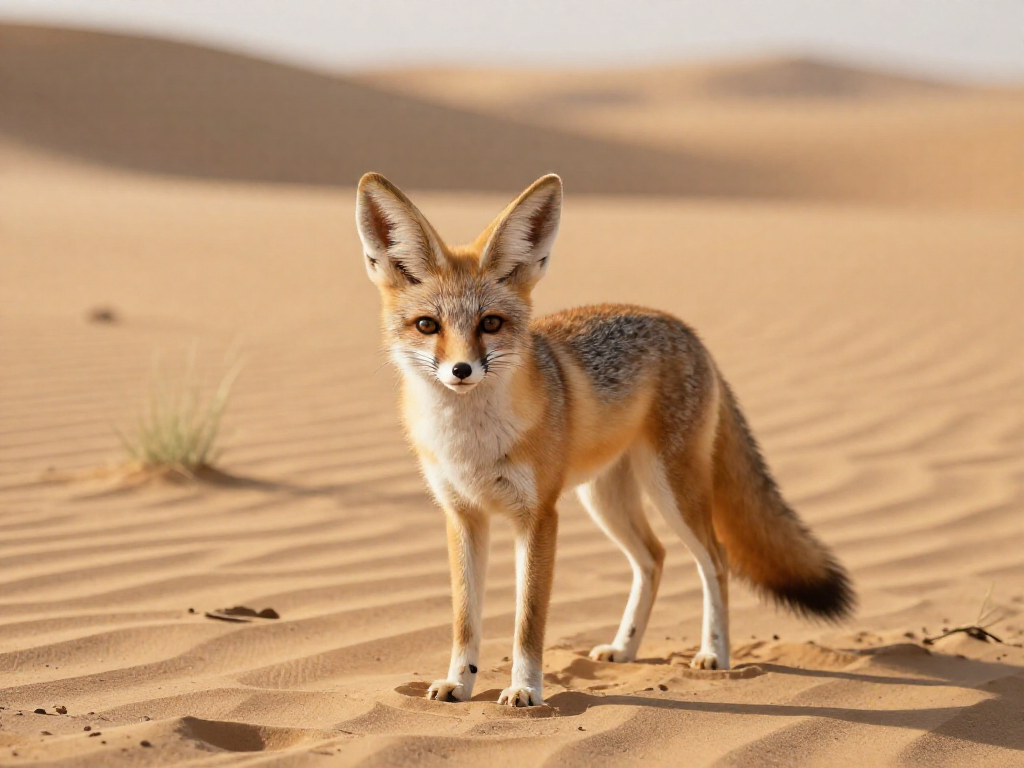
The Desert Problem: Brutal Heat, Almost No Water
Imagine living somewhere that goes months without a single drink of water — and where the ground can get hot enough to cook an egg. That's a normal Tuesday for a desert animal.
So what actually counts as a desert? The simple rule scientists use is rainfall: a desert gets less than about 10 inches (25 cm) of rain a year. For comparison, a typical US city like Atlanta gets around 50 inches. That's five times more water falling from the sky.
But dryness is only half the danger. Deserts hit animals with a double threat: scorching daytime heat and chronic water scarcity. Daytime surface temperatures in places like Death Valley can soar past 150°F (65°C).
Those two threats line up with the two main ways desert animals can die:
- Overheating — body temperature climbs too high to survive.
- Dehydration — they lose more water than they can replace.
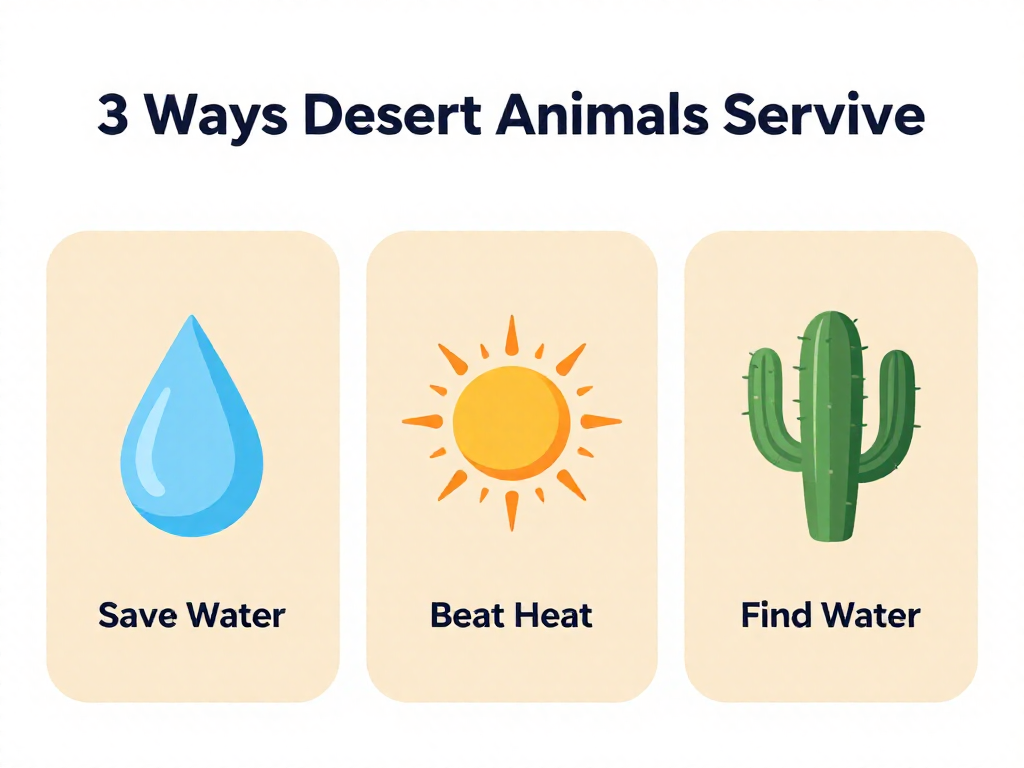
So how does anything stay alive out there? Every desert survivor leans on some mix of three clever strategies: save water, avoid the heat, and find hidden water where it seems like there's none. Let's see how they pull it off.
Water-Saving Superpowers: Squeezing Every Drop
Here's a fact that sounds impossible: the kangaroo rat can live its entire life without ever taking a sip of water. Instead, this tiny desert rodent manufactures its own water internally, pulling moisture out of the dry seeds it eats. As its body burns those seeds for energy, the chemical reaction releases tiny amounts of water—called metabolic water (water made as a byproduct of digesting food). It's like running a tap inside your own cells.
But making water is only half the trick. The real magic is refusing to waste it.
Recycling Down to the Last Drop
Most desert animals have turned their bodies into incredibly efficient water-recycling machines:
- Super-concentrated urine. Kangaroo rats have unusually long kidney structures that wring almost all the moisture back out of their urine before it leaves the body. Their pee comes out so concentrated it's nearly a paste—roughly five times more concentrated than human urine.
- Bone-dry droppings. Their gut reabsorbs water from waste, leaving droppings so dry they crumble.
- Moisture from breath. Every time you exhale, you lose water as warm, humid air. Kangaroo rats (and camels) have cool, specialized nasal passages that condense that moisture and pull it back in before it escapes—like a built-in dehumidifier in the nose.
The Camel Myth, Corrected
Camels are the desert's most famous survivors, but their humps don't store water—they store fat. That fat acts as an energy reserve, and burning it also produces a bit of metabolic water. The truly jaw-dropping part is how much dehydration a camel can shrug off: it can lose up to about 25% of its body weight in water and keep going, a level that would be fatal for most mammals. Then it can rehydrate fast, gulping around 30 gallons in a few minutes.
Locked-In Skin and Scales
Reptiles add another layer of defense—literally. Their tough, scaly skin is highly waterproof, sealing precious moisture inside while many soft-skinned animals lose it straight through their skin. That's a big reason lizards and snakes thrive where few mammals can.
Add it all up, and these animals don't just find water—they hoard it like treasure, drop by precious drop.
Beating the Heat: How Desert Animals Stay Cool
Here's a wild twist: many desert animals barely see the sun. The Sahara may bake at 120°F (49°C) by afternoon, so the smartest survival trick is often simple — don't be out in it.
Working the night shift. Tons of desert creatures are nocturnal (active at night), from kangaroo rats to scorpions to the fennec fox. By hunting and roaming after dark, they dodge the deadliest heat and slash how much water they lose just breathing and sweating.
Going underground. Burrows are the desert's natural air conditioning. Just a foot or two below the surface, temperatures stay dramatically cooler and more humid than the blistering air above. Animals like the desert tortoise spend up to 95% of their lives in burrows, riding out both summer scorch and winter cold.
Sleeping through summer. You've heard of hibernation in winter — but some animals do the opposite. It's called estivation (a summer dormancy where the body slows way down). Certain frogs and snails burrow in, wrap themselves in a moisture-trapping cocoon, and basically hit pause for months until the rains return.
Built-in radiators. Now for the body hacks. The fennec fox's giant ears aren't just adorable — at up to 6 inches (15 cm) tall on a fox that weighs only about 3 pounds, they're packed with blood vessels that release heat into the air, like a car radiator. The bigger the ears, the more heat dumped.
Staying light and keeping a cool head. Pale, sandy-colored coats reflect sunlight instead of soaking it up. And several desert mammals have a clever bit of plumbing called a carotid rete (a network of blood vessels at the base of the brain) that cools incoming blood before it reaches the brain — letting the body run hot while protecting its most delicate organ. Some gazelles use this to let their body temperature climb several degrees, saving the water they'd otherwise sweat away.
Between hiding from the sun and these built-in cooling systems, desert animals don't just endure the heat — they outsmart it.
Finding Water Where There Seems to Be None
Some desert animals never take a single sip of water in their entire lives — and they're perfectly fine. When the nearest puddle might be hundreds of miles away, the trick isn't finding water so much as outsmarting its absence.
Drinking their dinner. A lot of desert creatures get nearly all their moisture from food. A kangaroo rat can live on dry seeds alone, pulling water from the way its body breaks the food down. Predators like the fennec fox sip moisture straight from the prey, insects, and juicy plants they eat — a single ripe cactus fruit or a fat beetle is part snack, part water bottle.
Catching fog out of thin air. On the coastal dunes of Africa's Namib Desert, the darkling beetle (often called the fog-basking beetle) does a morning headstand. It tilts its back into the incoming sea fog, and tiny droplets collect on its bumpy shell, trickle down channels, and run right into its mouth.
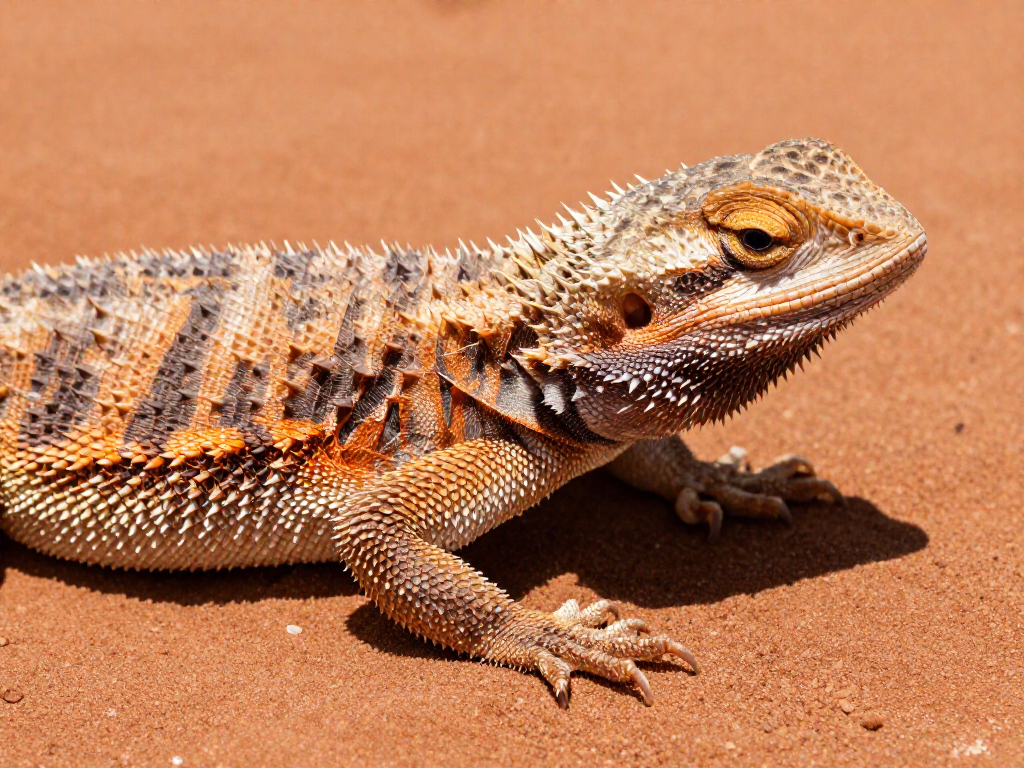
Drinking through their skin. Australia's thorny devil — a spiky little lizard about the size of your palm — has microscopic grooves between its scales. When it stands on damp sand or rain hits its body, water wicks along these channels by capillary action (the same pull that draws liquid up a paper towel) all the way to its mouth, no puddle required.
Going the distance. Bigger animals simply travel. Desert elephants in Namibia and Mali can trek dozens of miles between seasonal waterholes, remembering routes passed down across generations.
Different bodies, same clever goal: squeeze water out of a world that seems to have none.
Spotlight: 5 Desert Survival Champions
Some desert animals can go their entire lives without ever taking a sip of water. Meet five champions that turn the world's harshest neighborhoods into home—each using a different trick we explored above.
-
Kangaroo rat — the no-drink champion. This tiny rodent can survive without ever drinking liquid water. It makes "metabolic water" (water its body produces while breaking down the dry seeds it eats), and its super-efficient kidneys make urine so concentrated it loses almost no moisture. (Source: U.S. National Park Service.)
-
Camel — the dehydration tank. A camel can lose up to about 25% of its body weight in water and bounce right back after a big drink—a loss that would be deadly for most mammals. The hump stores fat, not water, and its oval-shaped red blood cells keep flowing even when the animal is severely dehydrated. (Source: San Diego Zoo Wildlife Alliance.)
-
Fennec fox — the heat-radiating cutie. Those famously huge ears aren't just adorable; they act like radiators, releasing body heat into the air to keep this 2–3 pound fox cool. It also stays underground during the day and hunts in the cooler night.
-
Thorny devil — the skin-drinking lizard. This spiky Australian lizard "drinks" through its skin. Tiny grooves between its scales channel dew and moisture by capillary action straight to its mouth—no puddle required. (Source: Australian Museum.)
-
Desert tortoise — the underground water-storer. It digs burrows to escape the heat and can store water in its bladder, drawing on that reserve during long dry spells. Please admire from a distance: a startled tortoise may release its stored water, which can be dangerous in the wild.
What Desert Survival Teaches Us
Strip away the dunes and the drama, and desert survival comes down to three brilliant strategies: save every drop (super-concentrated urine and water pulled straight from food), beat the heat (going nocturnal, burrowing, and shedding warmth through oversized ears), and find hidden water (harvesting fog and dew when rain never comes).
Humans are taking notes. Engineers studying the Namib Desert beetle—which collects fog on its bumpy back—have designed water-harvesting surfaces and self-filling water bottles, while termite-mound airflow has inspired buildings that stay cool without heavy air conditioning.
But even these champions have limits. As climate change pushes temperatures higher and dries water sources further, animals already living at the edge of what's survivable have less room to adapt. Protecting desert habitats helps keep these living masterclasses around.
The next time the world feels too hot to handle, remember a tiny kangaroo rat is out there thriving without ever taking a sip. Stay curious—nature still has plenty of secrets left to share.
See also
- Animal Superpowers category hub
- How Camels Survive in the Desert
- Nocturnal Animals: Creatures That Own the Night
- Amazing Animal Adaptations Explained
- How Animals Survive Extreme Cold
Related articles
How Do Spiders Make Silk? The Chemistry Behind Nature's Strongest Fiber
How do spiders produce silk, and what makes it so strong?
Jul 28, 2026 · 10 min read
How Electric Eels Generate Shocks: A Deep Dive into Nature’s Living Batteries
How do electric eels produce electricity?
Jul 28, 2026 · 10 min read
Why Don't Woodpeckers Get Headaches? The Built-In Shock Absorbers
How do woodpeckers avoid brain injury despite repeated hammering?
Jul 20, 2026 · 6 min read